
Finding a tiny newborn kitten without its mother can be both heartbreaking and overwhelming. These fragile little creatures depend entirely on their mother for warmth, food, and protection during the first weeks of life. When the mother cat is missing, sick, or unable to care for her kittens, humans sometimes need to step in as temporary caregivers.
While it may seem intimidating at first, caring for orphaned newborn kittens is absolutely possible with the right knowledge, patience, and dedication. Many rescued kittens grow into healthy, happy cats thanks to people who took the time to learn how to care for them properly.
In this comprehensive guide, you will learn everything you need to know about newborn kitten care without a mother, including feeding, warmth, hygiene, health monitoring, and how to help them grow strong.
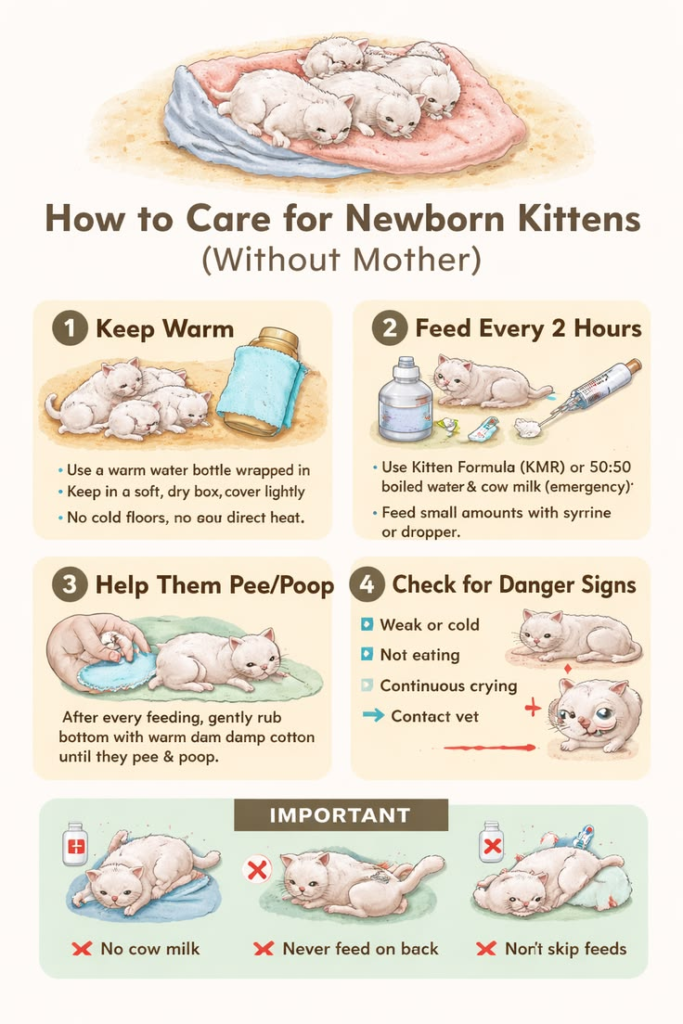
Understanding the Needs of Newborn Kittens
Before you begin caring for orphaned kittens, it’s important to understand how vulnerable they are.
Newborn kittens are extremely delicate because they are:
- Unable to regulate their body temperature
- Unable to urinate or defecate without stimulation
- Completely dependent on milk for nutrition
- Blind and deaf during the first days
- Very sensitive to infections and dehydration
In the wild or in normal circumstances, the mother cat handles all of these needs effortlessly. When she is absent, you will need to replicate her role as closely as possible.
The first four weeks of life are the most critical.
Step 1: Make Sure the Mother Is Really Gone
Before taking kittens away, it is crucial to confirm that the mother cat is truly absent.
Sometimes mother cats leave temporarily to:
- Search for food
- Move the kittens to a safer location
- Avoid attracting predators
If the kittens appear clean, warm, and quiet, the mother may still be caring for them.
Observe from a distance for 2–3 hours to see if she returns.
However, you should intervene immediately if the kittens are:
- Cold to the touch
- Crying continuously
- Injured
- Covered in dirt or fleas
- Found in a dangerous location
If the mother does not return, the kittens likely need help.
Step 2: Provide Immediate Warmth
Warmth is the most urgent need for newborn kittens.
Kittens cannot regulate their body temperature until they are about 3 weeks old. Without warmth, they can quickly develop hypothermia, which can be fatal.
Ideal Temperature for Newborn Kittens
| Age | Temperature |
|---|---|
| 0–1 week | 85–90°F (29–32°C) |
| 1–2 weeks | 80–85°F (27–29°C) |
| 2–3 weeks | 75–80°F (24–27°C) |
Ways to Keep Kittens Warm
You can create a warm environment using:
- Heating pads on low setting
- Warm water bottles wrapped in towels
- Electric pet warmers
- Soft blankets or fleece
Never place kittens directly on a heating pad because they can easily overheat or burn.
Instead, place the heat source under half of the box so kittens can move away if they get too warm.
Step 3: Create a Safe Nesting Area
Orphaned kittens need a quiet, safe place where they can sleep and grow.
A simple nesting box works well.
You can use:
- A cardboard box
- A plastic storage bin
- A pet carrier
Line the bottom with:
- Soft blankets
- Towels
- Fleece bedding
Avoid loose fabrics with holes that tiny claws can get caught in.
Place the nesting box in a quiet, draft-free area away from loud noises, pets, and children.
Kittens spend about 90% of their time sleeping, so a peaceful environment helps them grow stronger.
Step 4: Feeding Orphaned Newborn Kittens
Feeding is one of the most important aspects of newborn kitten care.
Mother cats feed their kittens every 2–3 hours, including during the night.
When the mother is absent, you must follow a similar schedule.
Use Kitten Milk Replacement Formula
Never feed newborn kittens cow’s milk because it can cause severe digestive problems.
Instead, use kitten milk replacer (KMR) designed specifically for kittens.
These formulas provide:
- Protein
- Fat
- Vitamins
- Essential nutrients
Kitten formula is available at:
- Pet stores
- Veterinary clinics
- Animal shelters
Step 5: Bottle Feeding Technique
Feeding newborn kittens requires patience and gentle handling.
Supplies You Need
- Kitten milk replacer
- Small kitten feeding bottle or syringe
- Clean towels
- Warm water for cleaning
Proper Feeding Position
Always feed kittens belly down, similar to how they would nurse from their mother.
Never feed a kitten on its back like a human baby, because milk can enter the lungs and cause pneumonia.
Feeding Steps
- Warm the formula to body temperature
- Hold the kitten gently
- Allow the kitten to latch onto the bottle
- Let the kitten suckle naturally
Do not squeeze the bottle forcefully. The kitten should control the feeding pace.
Feeding Schedule for Newborn Kittens
| Age | Feeding Frequency |
|---|---|
| 0–1 week | Every 2–3 hours |
| 1–2 weeks | Every 3 hours |
| 2–3 weeks | Every 4 hours |
| 3–4 weeks | Every 4–5 hours |
Young kittens need to be fed even during the night.
Skipping feedings can quickly lead to dehydration or low blood sugar.
Step 6: Helping Kittens Go to the Bathroom
This is something many first-time rescuers do not realize.
Newborn kittens cannot urinate or defecate on their own.
Normally, the mother cat stimulates them by licking their stomach and genital area.
Without this stimulation, the kittens can develop serious health issues.
How to Stimulate Kittens
After every feeding:
- Use a warm, damp cotton ball or soft cloth
- Gently rub the kitten’s lower belly and genital area
- Continue until the kitten urinates or defecates
This process mimics the mother’s grooming behavior.
Continue this routine until the kittens are about 3–4 weeks old.
Step 7: Monitoring Kitten Health
Healthy newborn kittens should show steady growth.
Signs of healthy kittens include:
- Quiet sleeping between feedings
- Strong appetite
- Gradual weight gain
- Warm body temperature
Weigh Kittens Daily
Using a digital kitchen scale, weigh kittens at the same time each day.
Healthy kittens typically gain:
10–15 grams per day
If a kitten stops gaining weight or loses weight, it may indicate illness or feeding issues.
Warning Signs to Watch For
Contact a veterinarian immediately if a kitten shows:
- Lethargy or weakness
- Refusal to eat
- Diarrhea
- Vomiting
- Difficulty breathing
- Cold body temperature
- Continuous crying
Newborn kittens can decline quickly, so early intervention is essential.
Step 8: Keeping Kittens Clean
Mother cats groom their kittens constantly to keep them clean.
Without the mother, caregivers must help with hygiene.
Cleaning Tips
- Use a warm damp cloth to wipe the kitten’s body
- Gently remove milk residue from fur
- Dry the kitten thoroughly afterward
Avoid bathing newborn kittens unless absolutely necessary, because they can become cold very quickly.
Step 9: Preventing Fleas and Parasites
Fleas can be extremely dangerous for newborn kittens.
Even a small number of fleas can cause anemia in tiny kittens.
Safe Flea Removal Methods
For newborn kittens:
- Use a flea comb
- Remove fleas manually
- Bathe only if necessary with warm water
Most flea medications are not safe for kittens under 8 weeks old, so consult a veterinarian before using any treatment.
Step 10: Socialization and Gentle Handling
Even very young kittens benefit from gentle human interaction.
Handling kittens daily helps them become:
- Friendly
- Confident
- Comfortable around people
However, handling should be gentle and brief during the first two weeks.
Always support the kitten’s entire body when holding them.
Development Milestones in Newborn Kittens
Understanding kitten development helps you know what to expect.
Week 1
- Eyes closed
- Ears folded
- Sleep most of the day
- Rely completely on bottle feeding
Week 2
- Eyes begin opening
- Hearing improves
- Crawling movements increase
Week 3
- Begin standing and walking
- Teeth start emerging
- May begin exploring surroundings
Week 4
- Increased curiosity
- Can start trying soft foods
- Litter training may begin
Introducing Solid Food
At around 4 weeks of age, kittens begin transitioning to solid food.
Start with a mixture called kitten gruel, made from:
- Wet kitten food
- Kitten milk replacer
The texture should be soft and soupy.
Gradually reduce the milk replacer as kittens learn to eat solid food.
By 8 weeks, kittens should be fully weaned.
Litter Box Training
Kittens usually start learning litter habits around 4 weeks old.
Use:
- A shallow litter tray
- Non-clumping kitten-safe litter
After meals, place the kitten in the litter box and gently scratch the litter with their paws.
Most kittens learn quickly through instinct.
Emotional Care for Orphaned Kittens
Beyond physical care, orphaned kittens need comfort and emotional security.
Without their mother and littermates, they can feel stressed or lonely.
Ways to provide comfort include:
- Soft blankets for snuggling
- A warm stuffed toy
- Gentle petting
- Calm voices
Some caregivers even use ticking clocks wrapped in cloth to mimic the sound of a mother’s heartbeat.
When to Visit a Veterinarian
Orphaned kittens should be checked by a veterinarian as soon as possible.
A vet can:
- Examine the kittens for illness
- Check for dehydration
- Provide feeding guidance
- Recommend deworming schedules
Regular veterinary care helps ensure the kittens grow healthy.
Vaccination Schedule
Kittens typically begin vaccinations at around 6–8 weeks of age.
Common vaccines protect against:
- Feline distemper
- Calicivirus
- Herpesvirus
Your veterinarian will guide you on the proper vaccination timeline.
Finding Homes for Rescued Kittens
If you are raising orphaned kittens temporarily, planning their future homes is important.
Start by:
- Contacting local animal shelters
- Screening potential adopters
- Ensuring kittens are healthy before adoption
Kittens should ideally stay with their siblings until at least 8 weeks old to learn social behaviors.
Common Mistakes to Avoid
Many new caregivers unintentionally make mistakes when caring for orphaned kittens.
Avoid these common issues:
Feeding Cow’s Milk
This can cause severe diarrhea and dehydration.
Overfeeding
Too much milk at once can cause stomach problems.
Skipping Night Feedings
Young kittens cannot go long periods without food.
Not Providing Enough Warmth
Cold kittens cannot digest food properly.
The Reward of Saving a Tiny Life
Caring for a newborn kitten without its mother requires dedication, patience, and compassion. The early days may feel exhausting with frequent feedings and constant monitoring, but watching a fragile kitten grow stronger every day is incredibly rewarding.
Many rescued kittens grow into affectionate companions who seem to understand that they were given a second chance at life.
Every bottle feeding, every warm blanket, and every moment of care can make the difference between life and death for these tiny animals.
Final Thoughts
Newborn kittens without a mother face enormous challenges, but with the right care, they can survive and thrive.
Remember the essentials:
- Keep them warm
- Feed them proper kitten formula regularly
- Stimulate bathroom needs after feeding
- Monitor their health and weight daily
- Provide gentle love and care
By stepping in during their most vulnerable days, you become the lifeline that gives them a future.
And one day, that tiny orphaned kitten may grow into a healthy, playful cat who fills your home with love, curiosity, and joy. 🐱💛