Burnout isn’t just about being tired. It’s that specific, heavy feeling of being “tired but wired”—exhausted, yet unable to switch off.
For years, I thought the cure for burnout was a week-long vacation. But the truth is, you can’t solve a lifestyle problem with a temporary escape. The only thing that truly fixes burnout is regulating your nervous system through a consistent, daily routine.
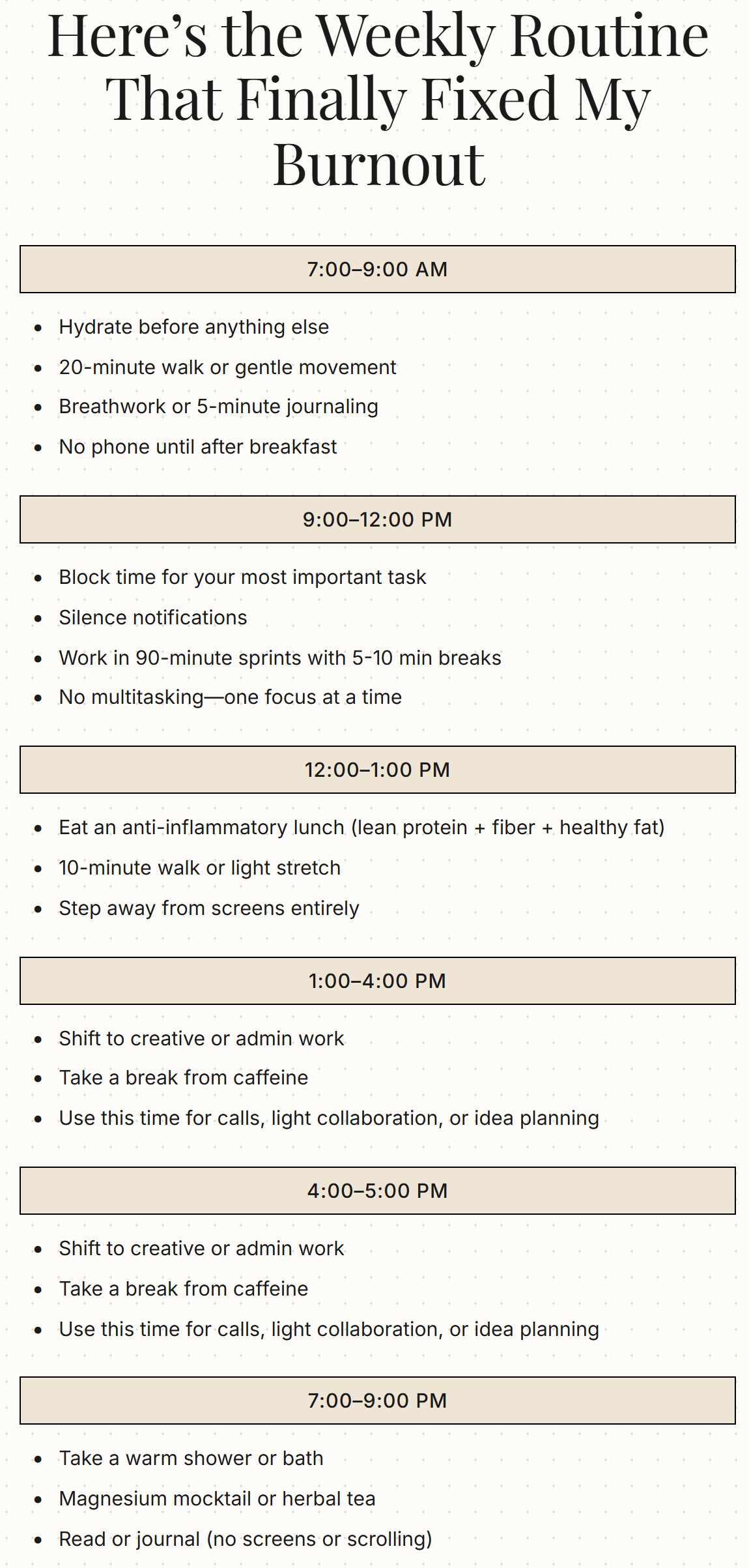
Based on the schedule that helped me reclaim my energy, here is the breakdown of a day designed to heal burnout while staying productive.
7:00 AM – 9:00 AM: The Low-Dopamine Morning
The biggest mistake we make is flooding our brains with cortisol and dopamine the second we wake up by checking our phones. This routine prioritizes a “slow start” to stabilize your mood for the rest of the day.
- Hydrate First: Your brain is 75% water. Waking up dehydrated leads to immediate fatigue and brain fog. Drink a large glass of water before coffee.
- Gentle Movement: You don’t need a HIIT workout. A 20-minute walk creates “optic flow” (objects moving past your eyes), which naturally quiets the amygdala (the brain’s anxiety center).
- No Phone Rule: By waiting until after breakfast to check notifications, you remain in a proactive state rather than a reactive one. You control your morning; your inbox doesn’t.
9:00 AM – 12:00 PM: The Deep Work Window
Biologically, most people experience peak cognitive alertness in the late morning. This is not the time for emails; it is the time for your “One Big Thing.”
- 90-Minute Sprints: Our brains operate on Ultradian Rhythms—cycles of energy that last about 90 minutes. Work intensely for 90 minutes, then take a mandatory 10-minute break to let your brain reset.
- Monotasking: Multitasking is a myth; it’s actually just rapid task-switching, which drains your glucose levels and lowers IQ. Focus on one task at a time.
12:00 PM – 1:00 PM: The True Reset
If you eat lunch at your desk while scrolling Twitter, your brain never actually registers a break.
- Anti-Inflammatory Lunch: Stress causes inflammation. Counteract this with a lunch rich in fiber, lean protein, and healthy fats (like avocados or olive oil) to avoid the 2 PM sugar crash.
- Zero Screens: Your eyes need a break from the focal length of a screen. Look at the horizon, go outside, or just close your eyes for a moment.
1:00 PM – 5:00 PM: Energy Management
Our circadian rhythm naturally dips in the afternoon. Instead of fighting it with caffeine (which will ruin your sleep tonight), lean into it by shifting the type of work you do.
- Admin & Creative Work: Save the low-energy tasks—answering emails, Slack messages, or loose brainstorming—for this window.
- The Caffeine Cut-Off: Caffeine has a half-life of roughly 5-6 hours. Drinking it at 3 PM means it is still in your system at 9 PM, disrupting your deep sleep. Switch to herbal tea or water.
7:00 PM – 9:00 PM: The Digital Sunset
How you sleep tonight determines how you feel tomorrow. This block is about signaling to your body that it is safe to power down.
- Magnesium Mocktail: Magnesium Glycinate is known as “nature’s relaxant.” It helps lower cortisol levels and prepares the muscles for rest.
- Warm Shower/Bath: Raising your body temperature with water causes a rapid cool-down afterward, which mimics the body’s natural sleep signals.
- No Screens: Blue light suppresses melatonin. Swap the scrolling for a book or a journal to ensure you fall asleep faster and stay asleep longer.
The Takeaway
Recovering from burnout doesn’t require you to quit your job or move to a cabin in the woods. It requires boundaries. By compartmentalizing your day into focus, rest, and disconnect blocks, you allow your nervous system the safety it needs to heal.
About the Author
