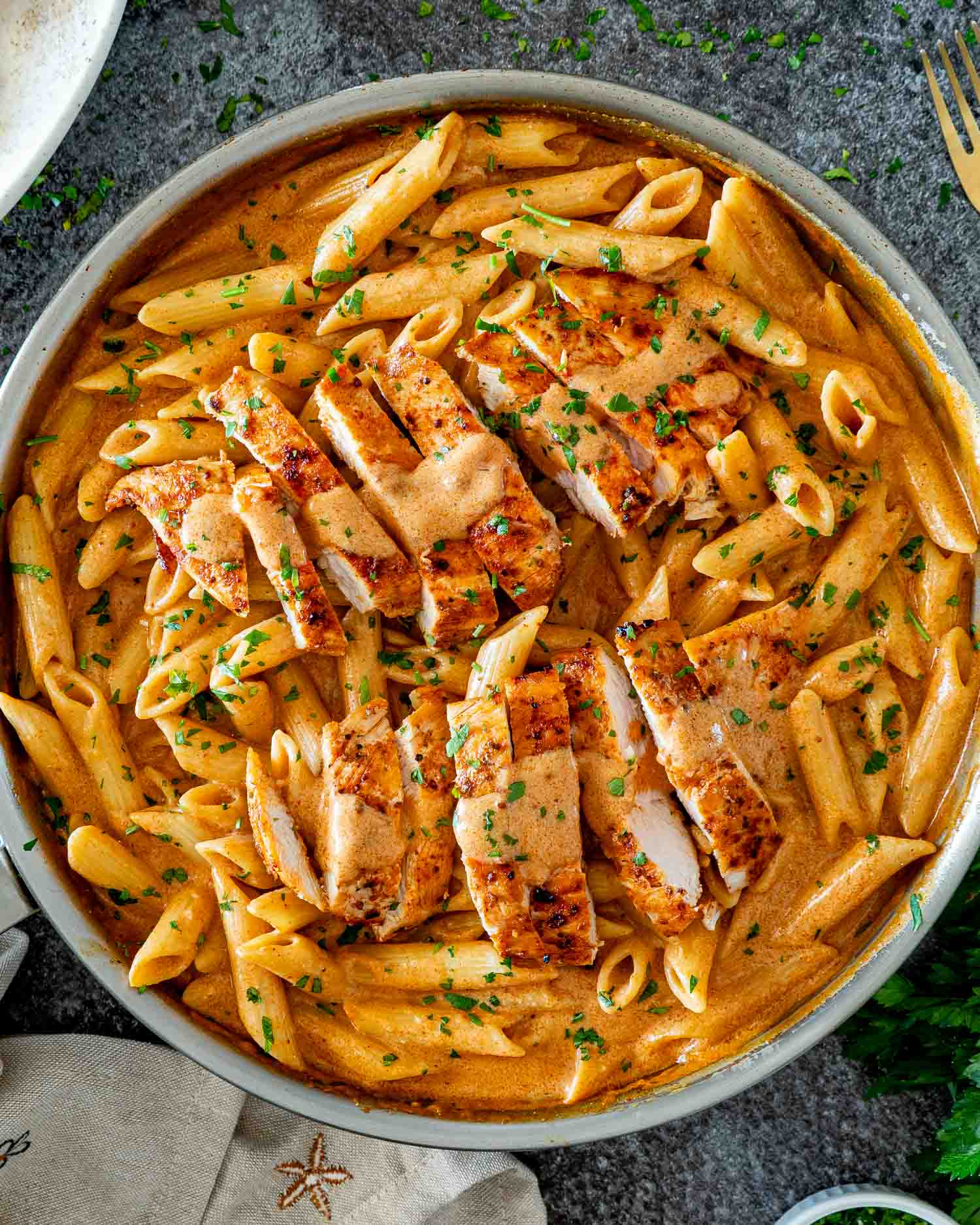
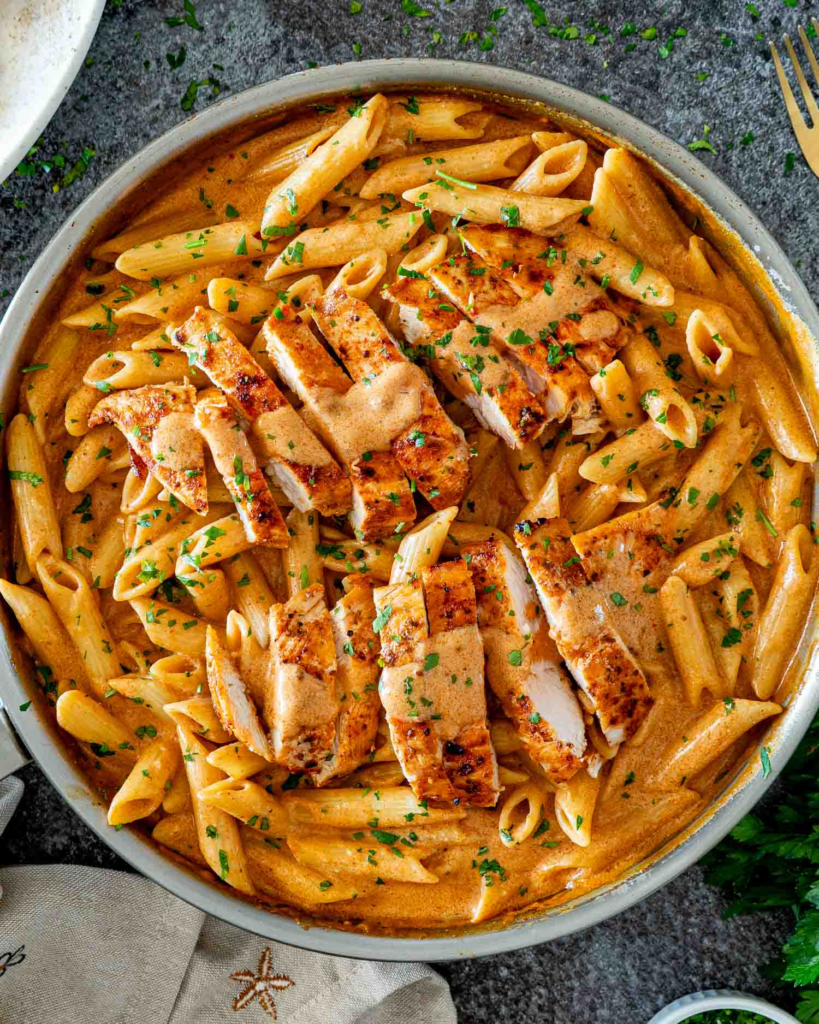
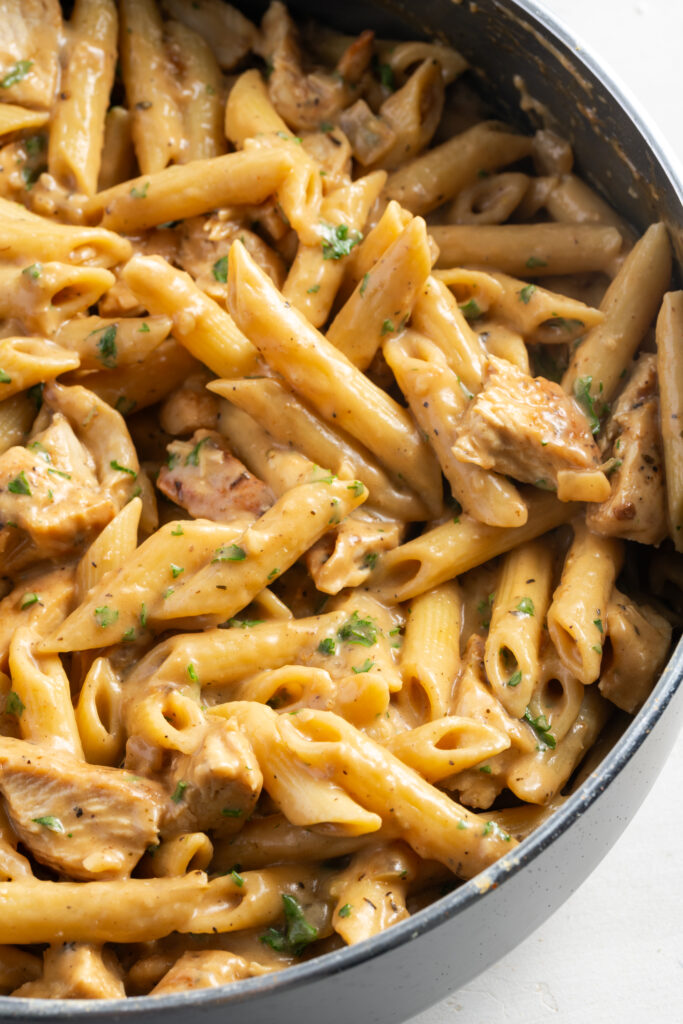
Some evenings call for a dinner that feels comforting without leaving a sink full of dishes. This creamy garlic Parmesan chicken pasta brings together golden chicken, tender pasta, and a silky sauce in one pot—with enough garlic to make the kitchen smell like dinner is already worth waiting for.
The pasta cooks directly in chicken broth, picking up flavor while releasing starch that helps thicken the sauce. Cream and Parmesan go in toward the end, giving you a rich finish without making a separate sauce or draining a heavy pot of water.
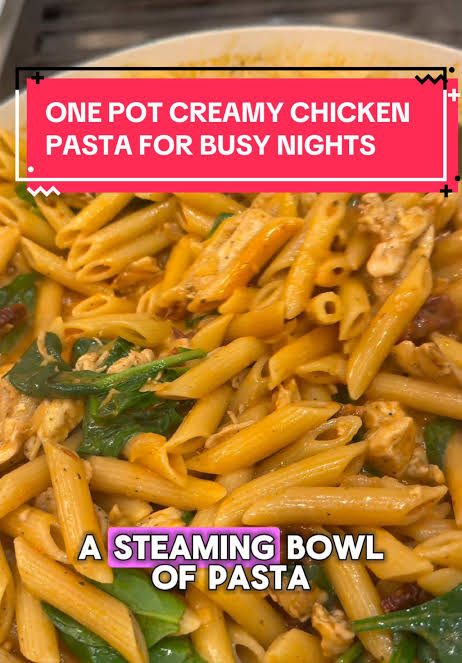
Serve it straight from the pot with a handful of parsley and a little extra black pepper. It is a satisfying dinner on its own, and easy to round out with a crisp salad or steamed vegetables.
Recipe at a glance
Servings: 4 generous portions
Prep time: About 15 minutes
Cook time: About 25–30 minutes
Total time: About 40–45 minutes
Equipment: A wide, heavy-bottomed 4–5-quart pot or deep sauté pan, spoon, grater, and instant-read thermometer
Allergens: Milk and wheat; check your pasta and broth labels for additional allergens.
Why This One-Pot Method Works
Cooking pasta in a measured amount of broth keeps its released starch in the pot. That starchy liquid becomes the base of the sauce, helping it cling to the pasta.
The chicken is cooked first and temporarily set on a clean plate. This creates flavorful browned bits in the pot and keeps the meat from simmering throughout the entire pasta-cooking stage.
Finally, finely grated Parmesan is stirred in off the heat. This gives you more control over the sauce and reduces the risk of the cheese forming clumps.
Pro tip: One pot does not mean unattended.
Stir every minute or two while the pasta simmers, sweeping across the bottom. This separates the pieces and helps prevent sticking.
Ingredients
For the chicken
- 1 pound (450 g) boneless, skinless chicken breasts, cut into even ¾-inch (2 cm) pieces
- 1 tablespoon olive oil
- ½ teaspoon fine salt, plus more to taste
- ½ teaspoon freshly ground black pepper
- 1 teaspoon Italian seasoning
- ½ teaspoon sweet paprika, optional
For the pasta and sauce
- 1 tablespoon unsalted butter
- 5–6 garlic cloves, finely minced
- 3½ cups (840 ml) low-sodium chicken broth, plus up to 1 cup (240 ml) extra as needed
- 12 ounces (340 g) dry penne or short fusilli
- ¾ cup (180 ml) heavy cream
- 3 ounces (85 g) Parmesan, finely grated from a block
- 2 tablespoons chopped fresh parsley, optional
- A pinch of red pepper flakes, optional
- 1–2 teaspoons lemon juice, optional, to finish
Measurement note: Liquid measurements use a 240 ml cup. Weigh the Parmesan if possible; its volume varies considerably with the size of the shreds and how tightly it is packed.
Choosing your ingredients
Chicken: Breast meat works well when cut evenly and cooked just until done. Boneless, skinless thighs are another option, although their cooking time may differ.
Pasta: Penne and short fusilli are easy to stir and hold the sauce well. Very large shapes, tiny pasta, and fresh pasta need different liquid amounts or timing.
Parmesan: A freshly grated block generally incorporates more smoothly than packaged grated cheese. Grate it finely so it melts quickly and evenly.
Broth: Low-sodium broth makes seasoning easier because Parmesan brings plenty of salt.
Cream: Heavy cream provides richness and a forgiving finish. Whole milk makes a thinner sauce and should not be treated as an identical replacement.
Before you start
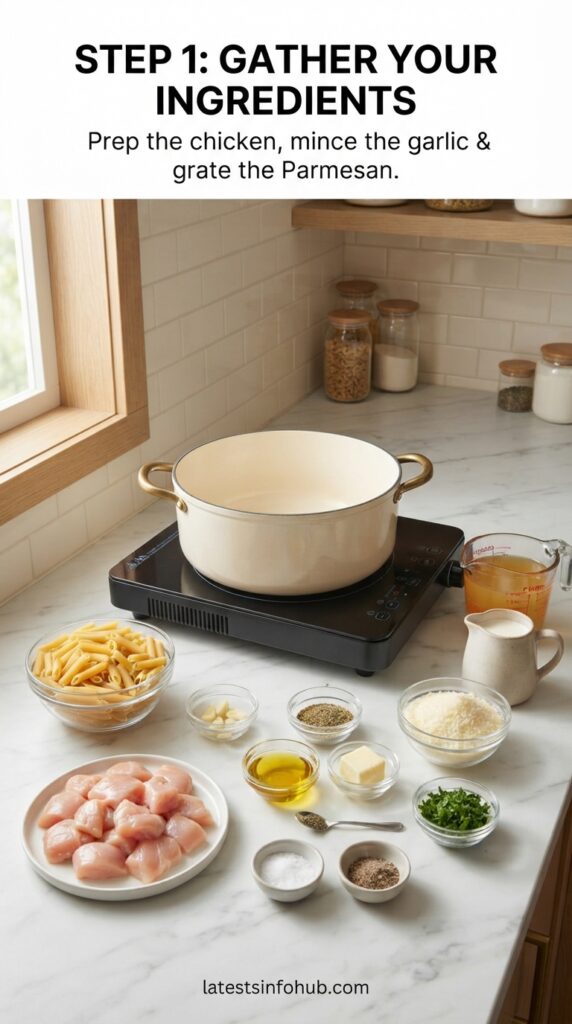
Mince the garlic, grate the cheese, and measure the broth before heating the pot. Once the garlic goes in, the next step comes quickly.
How to Make Creamy Garlic Parmesan Chicken Pasta
1. Season and cook the chicken
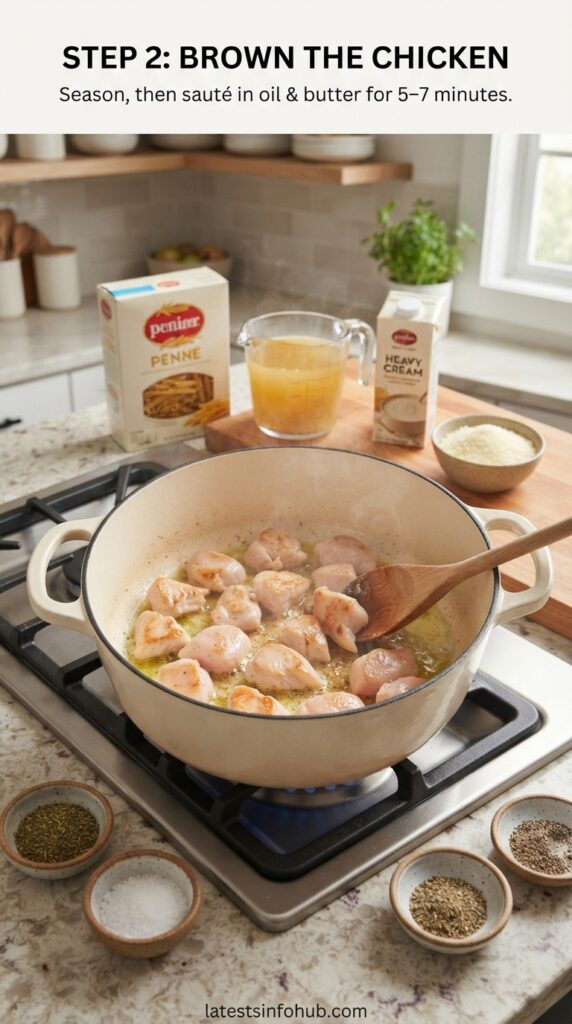
Pat the chicken dry with paper towels, then toss it with the salt, pepper, Italian seasoning, and optional paprika.
Heat the olive oil over medium-high heat. Add the chicken in a single layer, working in batches if the pot is crowded. Let it cook undisturbed for about 2–3 minutes to develop some color, then turn and continue cooking.
Small pieces may take about 5–7 minutes total, but use temperature rather than the clock to judge doneness. Check several of the largest pieces: chicken should reach 165°F (74°C) internally. Transfer the cooked chicken to a clean plate. FoodSafety.gov cooking-temperature guidance
You want golden patches on the chicken and brown bits in the pot. If any residue is blackened, remove it before continuing so it does not make the sauce bitter.
2. Gently cook the garlic
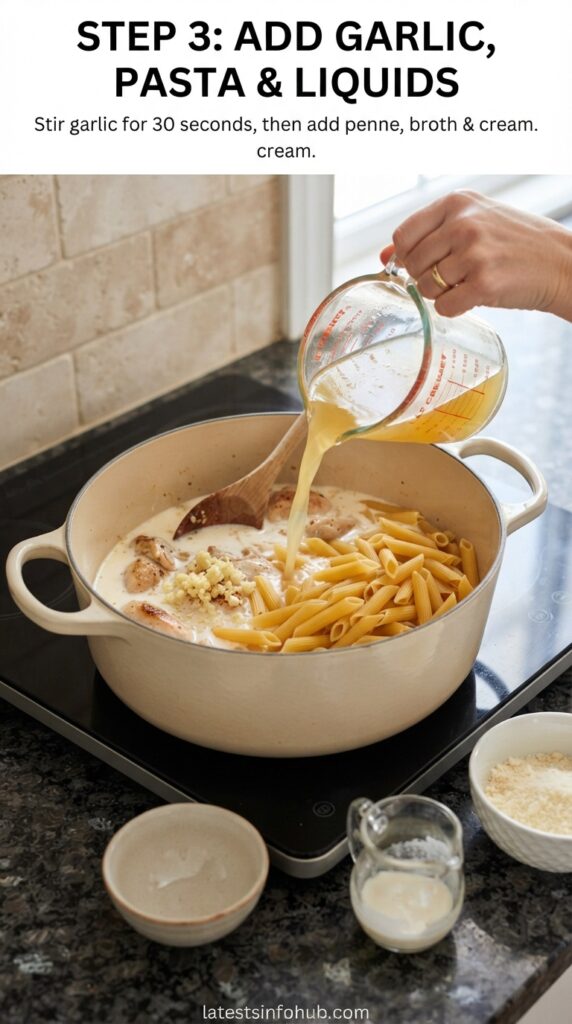
Reduce the heat to medium-low and let the pot cool briefly if it is very hot. Add the butter, followed by the minced garlic.
Stir for about 30–60 seconds, just until fragrant. The garlic should remain pale or lightly golden.
Pro tip: Garlic needs less heat than chicken.
Adding minced garlic to a smoking-hot pot can burn it almost immediately. Lower the heat first, and have the broth ready.
3. Add the broth and dry pasta
Pour in a splash of broth and scrape up the browned bits with a wooden spoon or silicone spatula. Add the remaining portion of the initial 3½ cups broth, followed by the dry pasta.
Bring to a gentle boil, then reduce to a steady simmer. Cook uncovered, stirring every minute or two and moving exposed pasta back into the liquid.
Start tasting around 2 minutes before the package’s suggested cooking time. One-pot cooking may take a little longer than boiling pasta in a large pot of water.
If the liquid becomes scarce while the pasta is still firm, add extra hot broth or water ¼ cup (60 ml) at a time. Keep the pasta moving freely without flooding the pot.
4. Add the cream and return the chicken
When the pasta is almost tender, stir in the cream and return the chicken with any collected juices.
Simmer gently for another 1–3 minutes, until the pasta is tender with a slight bite and the chicken is hot. The liquid should look creamy but still a little loose.
If it looks soupy, allow a brief additional simmer before adding the cheese. Avoid reducing it so far that the pasta starts sticking or becomes mushy.
5. Stir in the Parmesan off the heat
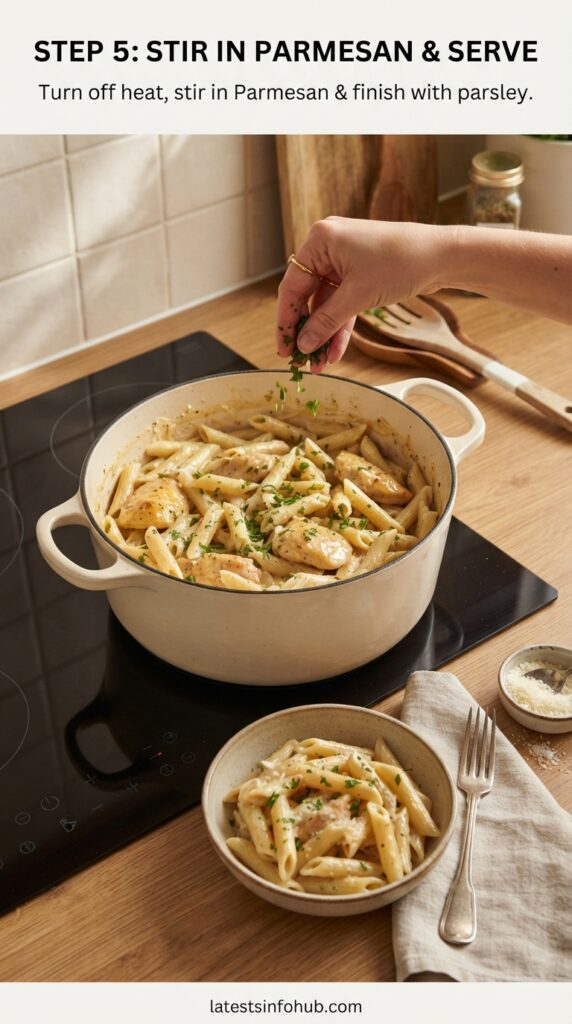
Remove the pot from the heat and wait until bubbling stops. Add the finely grated Parmesan in three or four small handfuls, stirring after each addition.
Let the pasta stand for about 2 minutes. The sauce will thicken as the cheese incorporates and the pasta continues absorbing liquid.
If it becomes too thick, stir in a splash of warm water or broth.
6. Taste and serve
Taste before adding more salt. Finish with black pepper, optional parsley, and red pepper flakes if you like a little heat.
For a brighter finish, add 1 teaspoon of lemon juice off the heat, taste, and add another teaspoon only if needed. You are looking for balance rather than a lemon-flavored sauce.
Serve promptly while the sauce is loose and glossy.
The right sauce consistency
Sauce should coat the pasta and settle gently around it when spooned into a bowl. If the pasta holds together in a stiff mound, add a little warm liquid and stir.
Easy Add-Ins and Substitutions
| Variation | How to adjust |
|---|---|
| Spinach | Stir in 2–3 loosely packed cups of baby spinach during the final minute of cooking. |
| Broccoli | Add 1½–2 cups of small florets during the last 4–5 minutes of the pasta simmer; check tenderness before finishing. |
| Peas | Stir in 1 cup of frozen peas with the cream and heat through. |
| Mushrooms | After removing the chicken, sauté 8 ounces (225 g) sliced mushrooms until their released moisture evaporates, then continue with the garlic. Allow extra cooking time. |
| Rotisserie chicken | Skip cooking raw chicken. Use about 2½ cups shredded cooked chicken and add with the cream; heat refrigerated chicken to 165°F (74°C). |
| Half-and-half | Replace the cream with the same amount for a less rich, somewhat thinner sauce. Use gentle heat. |
For a gluten-free version, choose gluten-free pasta and broth, but watch closely: pasta made from rice, corn, or legumes can absorb liquid and soften differently. Start checking early and adjust the broth in small increments.
If cooking for someone who avoids animal rennet, check the cheese label and choose a suitable Parmesan-style alternative.
Troubleshooting: Simple Fixes for Common Problems
The pasta is still hard, but the pot is nearly dry
Add ¼ cup hot broth or water, stir, and continue simmering. Repeat as needed. A wide pan or an overly strong simmer can evaporate liquid faster than expected.
The sauce is too thick
Take the pot off the heat and stir in warm liquid a tablespoon or two at a time. More cheese will make the problem worse.
The sauce is too thin
If you have not added the Parmesan yet, briefly simmer to reduce excess liquid, provided the pasta is not already fully cooked. After adding the cheese, give the sauce a couple of minutes to settle before deciding it needs adjustment.
The sauce is grainy or oily
The cheese may have been added while the liquid was too hot, or too much may have gone in at once. Remove from the heat and gently stir in a small splash of warm water. This may improve the texture, although a badly separated sauce may not become completely smooth.
The chicken is dry
Chicken breast can become dry when overcooked. Next time, cut consistent pieces, check their temperature early, and remove them as soon as they reach the safe cooking temperature.
The flavor seems flat
Taste for salt first, then add black pepper or a small squeeze of lemon. A little seasoning can bring the garlic and cheese into focus without needing more cream.
What to Serve With It
A crisp green salad with a sharp vinaigrette makes a refreshing partner for the creamy sauce. Steamed green beans, roasted broccoli, or sliced tomatoes also work well.
Garlic bread is lovely if you want a more substantial dinner, but the pasta is filling enough to serve by itself.
For younger diners, leave the red pepper flakes out of the pot and offer them at the table.
Make-Ahead, Storage, and Reheating
Prep ahead to save time
Grate the Parmesan, measure the seasonings, and portion the dry pasta in advance. You can also cut the chicken ahead and keep it covered in the refrigerator, separate from ready-to-eat ingredients.
For the creamiest texture, cook the pasta close to serving time. It continues absorbing sauce during storage.
Refrigerate promptly
Divide leftovers into shallow containers and refrigerate within 2 hours, or 1 hour when the surrounding temperature exceeds 90°F (32°C). Do not leave the whole pot on the counter to cool completely. FoodSafety.gov food-handling guidance
Keep the refrigerator at 40°F (4°C) or below and use refrigerated leftovers within 3–4 days. When using previously cooked chicken, account for its earlier storage time rather than restarting the clock. FoodSafety.gov cold-storage chart
Reheat with a splash of liquid
Place a portion in a saucepan with a little water, broth, or milk. Warm gently, stirring frequently, and add more liquid if needed.
For the microwave, use a microwave-safe bowl, cover loosely, and heat in short intervals, stirring between them. Reheat leftovers to 165°F (74°C) throughout. FoodSafety.gov reheating guidance
Can you freeze it?
Yes, but expect softer pasta and a sauce that may separate after thawing. Refrigeration is the better choice when you plan to eat it within a few days.
If freezing, portion promptly into freezer-safe containers. Thaw in the refrigerator and reheat gently with added liquid.
Next-day lunch tip
Pack the pasta with room to stir in a splash of water before reheating. Cold sauce can look very thick without needing extra cream or cheese.
Frequently Asked Questions
Do I cook the pasta before adding it?
No. Add it dry. The measured broth cooks the pasta and supplies the liquid for the sauce.
Can I use a whole 16-ounce box of pasta?
Not without adjusting the recipe. This version uses 12 ounces. A full 16-ounce box is one-third more pasta; scale the other ingredients by approximately one-third and still adjust the broth as you cook.
Can I use garlic powder?
Fresh garlic gives this dish its main aroma, but about 1 teaspoon garlic powder can work in a pinch. Add it with the broth rather than frying it in butter.
Can I double the recipe?
Yes, with a sufficiently large pot. Brown the chicken in batches and allow extra time for the liquid to heat. Evaporation does not scale exactly with serving size, so use the pasta’s texture to guide liquid adjustments.
Is this chicken Alfredo?
It has a similar creamy, cheesy character, but this is a one-pot garlic Parmesan chicken pasta with broth and cream. Traditional Alfredo uses a different preparation.
A warm bowl, a generous twist of pepper, and dinner is ready. Once you know to watch the liquid, keep the garlic from burning, and stir the cheese in gently, this is a useful recipe to keep close for the evenings when you want something comforting without a complicated cooking routine.