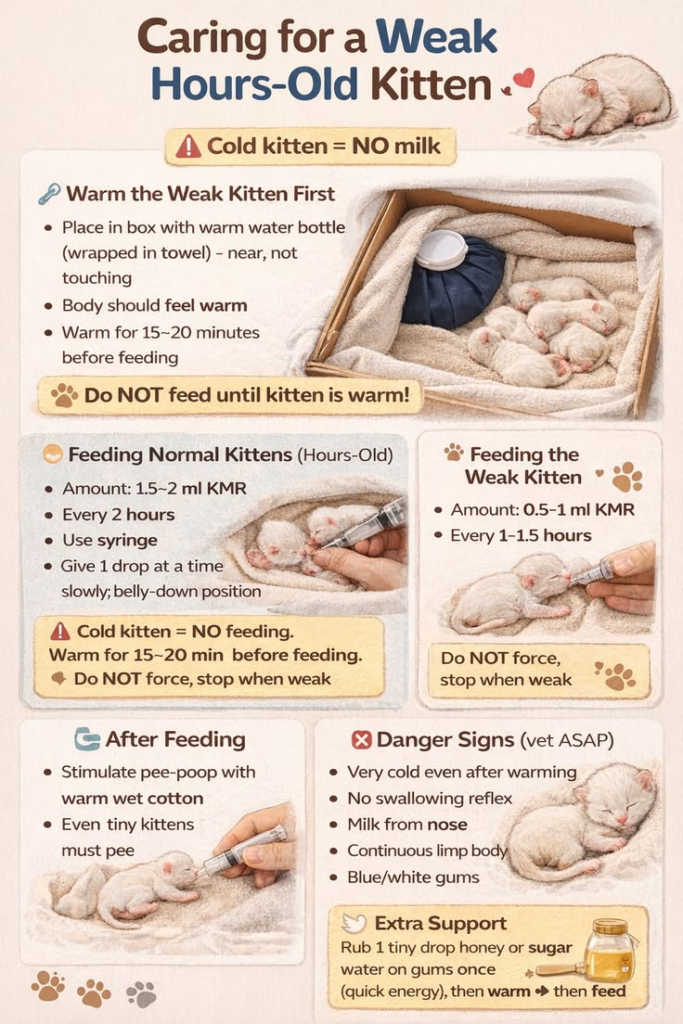
Caring for a weak, just-hours-old kitten is a highly critical situation. Newborn kittens are fragile, and if they are weak at birth or shortly afterward, immediate action can make the difference between life and death. Here’s a detailed, step-by-step guide for rescuing and supporting a fragile kitten in its first hours:
1. Assess the Kitten’s Condition
Before doing anything, carefully check the kitten:
- Check breathing: Is the kitten breathing steadily?
- Check body temperature: Newborn kittens should feel warm. Cold kittens are in immediate danger.
- Check color: Pale or bluish gums indicate poor circulation or oxygenation.
- Check movement: Weak or unresponsive kittens may have low blood sugar or hypothermia.
If the kitten is not breathing, you may need to perform gentle resuscitation. Hold the kitten upside down, gently clear the mouth and nose, and rub the chest or back to stimulate breathing.
2. Warm the Kitten Immediately
Weak kittens cannot regulate their own body temperature, and coldness is often the primary reason for weakness.
- Use a warm towel, heating pad on low, or warm water bottle wrapped in cloth.
- Never place the kitten directly on a hot surface.
- Ensure the kitten can move away from the heat if it becomes too warm.
- Target 85–90°F (29–32°C) for a newborn.
Tip: Cold kittens often won’t suckle. Warming them first can restore strength.
3. Stimulate the Kitten
If the kitten is weak and unresponsive, gentle stimulation can help:
- Rub the kitten’s body with a warm towel
- Gently massage the back and chest
- Gently stroke the mouth area to encourage rooting and suckling reflex
This mimics the mother cat’s grooming and can help revive the kitten.
4. Hydrate Before Feeding
Sometimes weak kittens are dehydrated. If the kitten is too weak to suckle:
- Offer warm, unflavored electrolyte solution (like Pedialyte) in very small amounts using a syringe or dropper.
- Use 1–2 ml every 15–20 minutes, but avoid forcing it too fast.
- Do not feed formula until the kitten is warm and more active, as feeding a cold kitten can cause digestive shock.
5. Feeding a Weak Kitten
Once the kitten is warmed and slightly stronger:
- Use kitten milk replacer (KMR) only. Never feed cow’s milk.
- Warm the formula to body temperature (about 100°F / 37–38°C).
- Use a kitten bottle or syringe. Start slowly to avoid choking.
- Feed in a belly-down position, similar to how a kitten nurses naturally.
Weak kittens may need frequent, tiny feedings every 1–2 hours. Patience is critical.
6. Bathroom Stimulation
Even hours-old kittens need help to urinate and defecate:
- Use a warm, damp cotton ball or cloth
- Gently rub the genital and anal area after every feeding
- Continue until the kitten can eliminate on its own (usually by 3–4 weeks)
7. Keep the Environment Safe and Calm
Weak kittens are extremely vulnerable to stress. Provide:
- A quiet, draft-free area
- A soft, warm nesting box lined with blankets
- Minimized handling at first — only touch for feeding and stimulation
Stress and loud noises can make a weak kitten deteriorate quickly.
8. Monitor Closely
- Check weight frequently: Use a kitchen scale; kittens should gain steadily.
- Observe behavior: Weakness, continuous crying, or refusal to eat indicates urgent care is needed.
- Check temperature: Cold kittens may need warming before every feeding.
9. Know When to Call a Vet
A kitten born weak, limp, or cold often requires professional intervention. Seek veterinary help immediately if the kitten:
- Refuses to feed
- Stops breathing or gasps
- Has bluish or pale gums
- Shows persistent lethargy or unresponsiveness
A vet can provide fluids, warmth, and medical support to stabilize a fragile kitten.
10. Key Tips for Saving Weak Newborns
- Warmth is the first priority
- Hydrate before feeding if dehydrated
- Feed small, frequent amounts of KMR
- Keep them calm, safe, and clean
- Stimulate elimination after every feeding
- Weigh and monitor hourly in the first day
Hours-old kittens are extremely fragile, but with warmth, hydration, careful feeding, and constant monitoring, many can survive and thrive.