We often believe that to achieve significant change in our lives, we need to take significant action. We convince ourselves that massive success requires massive effort—a complete overhaul of our diet, a rigid 5 a.m. wake-up routine, or working until we burn out.
However, psychology suggests the opposite is true. Real, sustainable transformation rarely happens through overnight overhauls. Instead, it is the result of Micro-Habits: tiny, almost effortless actions that, when compounded over time, yield massive results.
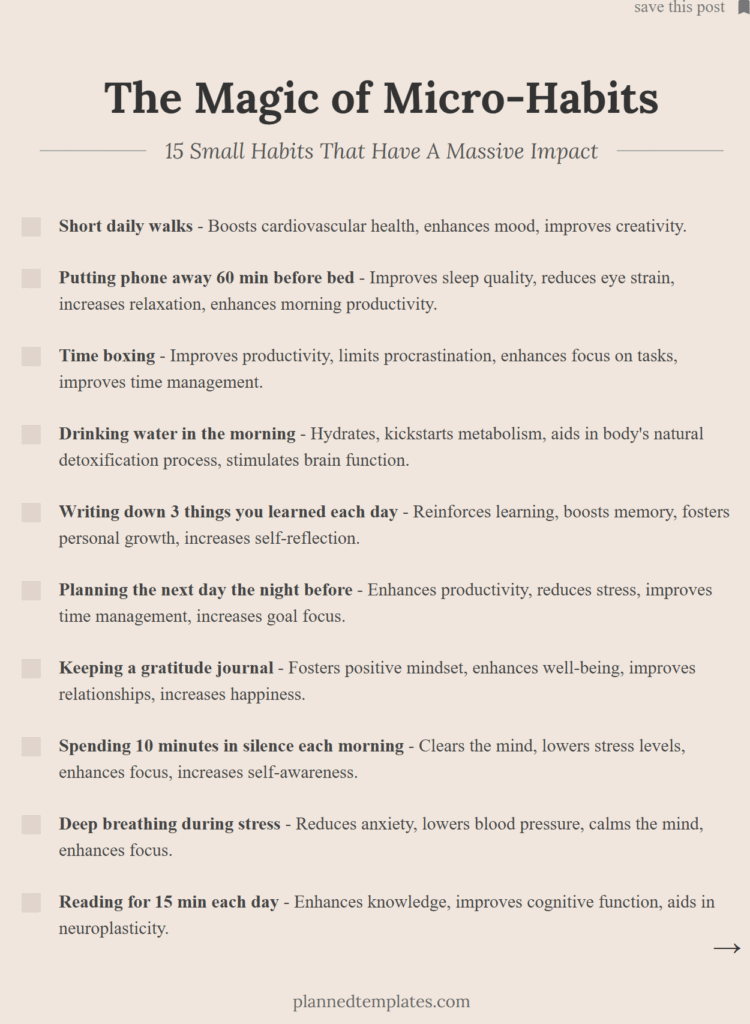
Based on insights from clinical psychology, here is a breakdown of 10 micro-habits that take very little time but offer a high return on investment for your mental and physical health.
1. The Physiology of “Resetting”
Our bodies are not designed for chronic stress or stagnation. These three habits focus on resetting your biological baseline.
Short Daily Walks
The Habit: Take a 10–15 minute walk, preferably outside. The Impact: Walking does more than burn a few calories. Optic flow (objects moving past your eyes) suppresses the amygdala, the brain’s fear center. It boosts cardiovascular health and has been proven to enhance divergent thinking (creativity). If you are stuck on a problem, move your body to move your mind.
Morning Hydration
The Habit: Drink a full glass of water immediately upon waking. The Impact: You wake up dehydrated after 7–8 hours of sleep. Dehydration immediately spikes cortisol (stress hormone) levels. Hydrating kickstarts your metabolism, aids natural detoxification, and creates a foundation for sharp brain function before you’ve even had your coffee.
Deep Breathing During Stress
The Habit: When you feel tension rising, pause for 60 seconds of deep, diaphragmatic breathing. The Impact: This is the quickest way to hack your nervous system. Deep breathing stimulates the Vagus nerve, switching your body from the sympathetic (fight or flight) state to the parasympathetic (rest and digest) state. It lowers blood pressure and anxiety almost instantly.
2. Optimizing Cognitive Function
In an age of distraction, the ability to focus is a superpower. These habits protect your brain’s processing power.
Time Boxing
The Habit: Allocate specific blocks of time (e.g., 25 or 50 minutes) to a single task, removing all other distractions. The Impact: This combats “Parkinson’s Law”—the adage that work expands to fill the time available for its completion. Time boxing limits procrastination and forces hyper-focus, allowing you to complete deep work in less time.
Reading for 15 Minutes Daily
The Habit: Read a non-fiction or fiction book (not social media) for a quarter of an hour. The Impact: Reading is neuroplasticity in action. It improves connectivity in the brain, increases empathy (especially fiction), and prevents cognitive decline. It is a workout for your attention span in a world designed to shorten it.
Morning Silence
The Habit: Spend the first 10 minutes of your day in silence—no phone, no music, no talking. The Impact: We live in a noise-polluted world. Silence allows the brain’s “Default Mode Network” to settle. It clears the mind, lowers baseline stress levels for the day ahead, and increases self-awareness.
3. Emotional Regulation & Growth
Happiness is not a destination; it is a skill that can be practiced.
The “3 Things Learned” Log
The Habit: Write down three things you learned or realized at the end of the day. The Impact: This enforces “active reflection.” It boosts memory retention and fosters a growth mindset. Instead of letting days blur together, you train your brain to extract value and wisdom from daily experiences.
The Gratitude Journal
The Habit: Write down three specific things you are grateful for. The Impact: The brain has a negativity bias; it naturally scans for threats and problems. Gratitude journaling physically changes neural pathways, training the brain to scan the environment for positives. This leads to increased happiness and better relationships.
4. Structure and Sleep Hygiene
How you end your day dictates how you begin the next one.
The Digital Sunset (60 Min Before Bed)
The Habit: Put the phone away one hour before sleeping. The Impact: The blue light from screens suppresses melatonin, the hormone needed for deep sleep. Beyond light, the dopamine hits from scrolling keep the brain alert. A digital detox ensures better sleep quality, reduced eye strain, and a calmer, more productive morning the next day.
Planning the Night Before
The Habit: Spend 5 minutes outlining your top 3 priorities for tomorrow. The Impact: This reduces “decision fatigue.” If you wake up and have to decide what to do, you waste mental energy before you’ve even started. Planning ahead reduces morning anxiety and ensures you wake up with purpose and goal focus.
The Takeaway: Consistency > Intensity
The “magic” of these habits lies in their size. Because they are small, they are difficult to say “no” to. You might not have the energy for a one-hour gym session, but you have the energy for a 10-minute walk.
Do not try to implement all 10 at once. Pick one or two from this list to focus on this week. Once they become automatic—once they become who you are rather than what you do—add another. That is the path to massive impact.
About the Author
