Sage green has quietly become one of those rare paint colors that manages to feel trendy and timeless at the same time.
Unlike brighter botanical greens or deep forest shades, sage green has a muted, earthy quality. Most sage colors contain a touch of gray, beige, blue, or yellow that softens the green and makes it surprisingly easy to live with. The result is a color that brings the calming feeling of nature indoors without making your home look overly colorful.
That versatility explains why sage green works almost everywhere.
You can use it to create a peaceful bedroom, a sophisticated living room, a farmhouse-inspired kitchen, a cozy home office, or even a dramatic bathroom. It also looks beautiful on kitchen cabinets, bathroom vanities, built-ins, accent walls, doors, and exterior siding.
Sherwin-Williams has an especially strong collection of muted greens, but choosing between them can be difficult. Put several sage paint chips next to each other and they may initially look almost identical. Once they are on the wall, however, their differences become much more obvious.
One sage may become warm and olive-toned in afternoon sunlight, while another reveals cool blue-gray undertones. A shade that looks beautifully soft in a bright kitchen might appear surprisingly dark in a north-facing bedroom.
That’s why choosing the right sage green involves more than simply finding a pretty paint swatch.
In this guide, we’ll explore nine of the best Sherwin-Williams sage green paint colors, including soft neutral greens, classic herbal sages, gray-green favorites, and several deeper shades that are particularly beautiful for cabinetry and accent spaces.
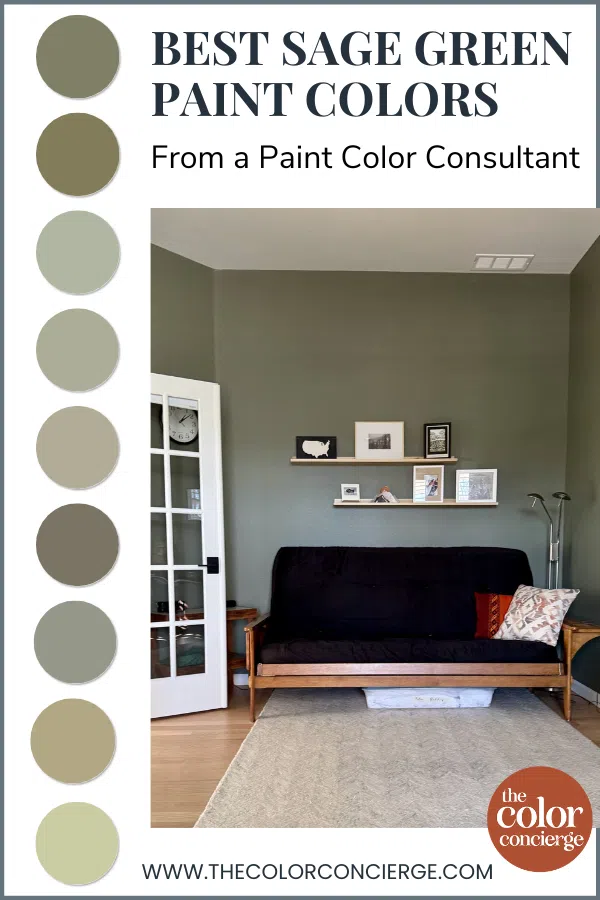
Quick Comparison of the Best Sherwin-Williams Sage Greens
| Paint Color | Approx. LRV | Overall Character | Best Uses |
|---|---|---|---|
| Clary Sage SW 6178 | 41 | Warm, classic herbal sage | Living rooms, bedrooms, cabinets |
| Evergreen Fog SW 9130 | 30 | Sophisticated green-gray | Bedrooms, offices, cabinets |
| Svelte Sage SW 6164 | 41 | Earthy gray-green | Living rooms, dining rooms |
| Softened Green SW 6177 | 49 | Light, gentle green neutral | Bedrooms, open spaces |
| Contented SW 6191 | 52 | Soft blue-gray-green | Bathrooms, bedrooms |
| Retreat SW 6207 | 21 | Moody blue-gray-green | Cabinets, accent walls |
| Acacia Haze SW 9132 | 32 | Smoky neutral green | Offices, bedrooms, exteriors |
| Dried Thyme SW 6186 | 21 | Deep organic sage | Cabinets, dining rooms |
| Green Onyx SW 9128 | 31 | Warm muted olive-sage | Living rooms, cabinetry |
Remember that LRV, or Light Reflectance Value, indicates how much visible light a paint color reflects. Higher numbers generally appear lighter, while lower numbers absorb more light and create a deeper, moodier appearance. Sherwin-Williams uses the same concept when advising homeowners about how lighting influences paint colors.
Now let’s look at each color in detail.
1. Sherwin-Williams Clary Sage SW 6178
If someone asked you to imagine a classic sage green, Clary Sage SW 6178 would probably come very close.
It is an earthy, botanical green softened enough to work almost like a neutral. Sherwin-Williams describes Clary Sage as a soft herbal green warmed by a subtle yellow undertone.
That little bit of warmth is important.
Some muted greens become noticeably gray or blue in certain rooms. Clary Sage stays relatively organic and natural, reminding you more of dried herbs, eucalyptus leaves, and garden foliage.
Its approximate LRV of 41 places it comfortably in the mid-range. It has enough depth to make a visual impact but isn’t so dark that it automatically overwhelms an entire room.
Where Clary Sage works best
Clary Sage is particularly beautiful in:
Living rooms with warm wood floors, bedrooms with cream bedding, dining rooms, mudrooms, kitchen cabinetry, bathroom vanities, built-in shelving, and cottage or farmhouse-style interiors.
It looks especially good when surrounded by natural materials.
Think oak furniture, woven baskets, linen curtains, aged brass hardware, stone, jute rugs, terracotta pottery, and warm off-white fabrics.
Sherwin-Williams officially suggests coordinating it with colors including Sagey SW 6175, Dover White SW 6385, and Tumblin’ Tumbleweed SW 9120.
Clary Sage is also an excellent choice if you’re nervous about green.
It clearly reads as green, but it isn’t bright, grassy, or tropical. Instead, it gives a room that soft, collected feeling that works beautifully in traditional, modern farmhouse, cottage, transitional, organic modern, and nature-inspired homes.
Best overall choice: If you want a recognizable, classic sage green without going too light or too dark, start your sampling process with Clary Sage.
2. Sherwin-Williams Evergreen Fog SW 9130
Few Sherwin-Williams greens have received as much attention as Evergreen Fog SW 9130, which was selected as the company’s 2022 Color of the Year.
There’s a good reason it became so popular.
Evergreen Fog sits somewhere between green, gray, and a subtle hint of blue. Sherwin-Williams describes it as a versatile green-meets-gray shade with some blue influence, giving it a sophisticated, chameleon-like character.
With an LRV of about 30, Evergreen Fog is considerably deeper than many soft sage colors.
Rather than disappearing quietly into the background, it gives walls presence.
But it still feels muted.
That’s the magic of Evergreen Fog: it provides color without feeling loud.
Where Evergreen Fog works best
Evergreen Fog can be stunning in bedrooms, dining rooms, kitchen cabinetry, home offices, built-in bookcases, mudrooms, bathroom vanities, and entryways.
It is particularly effective in rooms where you want to create a slightly cocooning atmosphere.
Imagine Evergreen Fog walls with creamy trim, medium-toned oak floors, a linen sofa, black or antique brass accents, pottery, natural stone, and soft warm lighting.
That’s where this paint color shines.
Sherwin-Williams recommends coordinating colors including Ethereal White SW 6182, Neutral Ground SW 7568, and Dried Edamame SW 9122.
Because Evergreen Fog contains gray and blue influences, lighting matters. In bright warm sunlight it can appear greener and softer. In cooler northern light it may become more smoky and gray.
For this reason, it’s especially important to sample Evergreen Fog on more than one wall.
Best sophisticated sage: Choose Evergreen Fog if you love sage green but want something deeper, moodier, and slightly more contemporary.
3. Sherwin-Williams Svelte Sage SW 6164
Svelte Sage SW 6164 is one of the most interesting colors on this list because it doesn’t immediately scream “green.”
Instead, it sits comfortably between sage, gray, beige, and olive.
Sherwin-Williams describes Svelte Sage as a nature-inspired green with a cool gray undertone that creates a sophisticated atmosphere.
Its LRV is approximately 41, placing it in similar territory to Clary Sage in terms of overall depth.
The two colors, however, don’t feel identical.
Clary Sage tends to have a more obvious herbal-green personality, while Svelte Sage can feel earthier and more subdued.
That’s exactly why it works so well in neutral interiors.
Where Svelte Sage works best
Svelte Sage is a lovely choice for living rooms, dining rooms, bedrooms, hallways, home offices, cabinetry, and open-plan spaces.
It works beautifully when paired with:
Cream upholstery, warm beige, natural oak, medium brown wood, rustic stone, aged brass, bronze, off-white ceramics, and woven textures.
Sherwin-Williams lists Nonchalant White SW 6161, Creamy SW 7012, and Maison Blanche SW 7526 among its coordinating colors.
Svelte Sage is particularly useful for homeowners who have an interior dominated by warm neutrals and aren’t sure how to introduce color.
Instead of creating a dramatic contrast, it gently bridges the gap between beige and green.
You get the freshness of a botanical color without losing the softness of a neutral palette.
Best sage for beige-loving homes: Svelte Sage is ideal if you want to move away from beige or greige without suddenly making your home feel extremely colorful.
4. Sherwin-Williams Softened Green SW 6177
If the darker greens on this list feel intimidating, take a look at Softened Green SW 6177.
This is exactly what its name suggests: a gentle, toned-down green that behaves almost like a colored neutral.
Sherwin-Williams describes Softened Green as a comforting natural green neutral and recommends pairing it with lighter organic neutrals.
Its LRV is around 49, making it noticeably lighter than Evergreen Fog, Retreat, Dried Thyme, or Green Onyx.
That makes it particularly useful for larger wall areas.
Where Softened Green works best
Consider Softened Green for bedrooms, nurseries, living rooms, kitchens, hallways, bathrooms, guest rooms, and relaxed open-plan interiors.
It is an excellent option when you want an entire room to feel softly green without turning the paint color into the dominant decorative feature.
Sherwin-Williams lists Sagey SW 6175, Queen Anne’s Lace SW 6420, and Dirty Martini SW 9119 as coordinating colors.
Pair it with warm white trim and natural wood and you’ll get a gentle organic look.
Add woven textiles, linen, rattan, ceramic accessories, and muted botanical artwork, and the room can feel effortlessly calm rather than deliberately “decorated.”
Softened Green is also attractive on board-and-batten walls and architectural millwork; Sherwin-Williams itself has featured the color in a board-and-batten project.
Best light sage neutral: Choose Softened Green if you want sage to serve as a subtle background color rather than the star of the room.
5. Sherwin-Williams Contented SW 6191
For homeowners who prefer cooler sage colors, Contented SW 6191 deserves serious consideration.
This shade has a delicate mixture of green, gray, and blue.
Sherwin-Williams describes Contented as a subtle green with complex blue-gray undertones designed to create a soothing atmosphere.
Its LRV is approximately 52, making it one of the lighter options in our selection.
That extra reflectivity makes Contented particularly useful in spaces where darker sage greens might feel too heavy.
Where Contented works best
Contented can be lovely in bathrooms, bedrooms, guest rooms, laundry rooms, living rooms, kitchens, and quiet reading spaces.
Because of those cooler undertones, it can create a spa-like feeling when paired with soft white, pale stone, marble, light oak, brushed nickel, or muted blue-gray accessories.
Sherwin-Williams recommends coordinating colors such as Opaline SW 6189, Classic Light Buff SW 0050, and Dirty Martini SW 9119.
Contented also makes an interesting alternative to conventional gray.
If you’ve been looking at gray walls but everything feels too cold, industrial, or flat, this subtle green introduces just enough organic color to make the room feel more alive.
The important thing is to examine it in your specific lighting.
Its blue-gray characteristics may become more noticeable under cool artificial light or in rooms receiving cooler daylight.
Best cool light sage: Contented is a strong choice for anyone wanting a gentle, sophisticated gray-green with a peaceful personality.
6. Sherwin-Williams Retreat SW 6207
Now we’re entering moodier territory.
Retreat SW 6207 is a beautiful muted green with noticeable blue-gray influences.
Sherwin-Williams describes it as a green with blue-gray undertones and specifically recommends it for applications including bedrooms and kitchen cabinets.
With an LRV of about 21, Retreat absorbs considerably more light than colors such as Softened Green or Contented.
That makes it dramatically richer on the wall.
Where Retreat works best
Retreat looks fantastic on kitchen cabinets, islands, bathroom vanities, built-in bookshelves, office walls, bedroom walls, mudroom cabinetry, and accent walls.
Pair it with warm or slightly creamy white rather than an extremely icy white for a softer contrast.
Natural oak, walnut, brass, black metal, soapstone, quartz, marble, handmade tile, and leather can all complement Retreat beautifully.
Sherwin-Williams identifies Spare White SW 6203, Origami White SW 7636, and Verdigreen SW 9042 as coordinating options.
Retreat can also solve a common design problem.
Sometimes a pale sage on kitchen cabinetry looks washed out when surrounded by bright countertops and strong daylight. A deeper color such as Retreat has enough visual weight to hold its own.
Just remember that it is genuinely dark compared with many popular sage greens.
Paint every wall in a poorly illuminated room and it can create a moody, intimate atmosphere. That may be exactly what you want — but it shouldn’t come as a surprise.
Best moody sage: Retreat is ideal for anyone who wants sophisticated green cabinetry or an enveloping, dramatic room.
7. Sherwin-Williams Acacia Haze SW 9132
Acacia Haze SW 9132 lives in that beautiful territory where you’re not entirely sure whether you’re looking at green, gray, or something in between.
That ambiguity makes it extremely versatile.
Its official Sherwin-Williams color data places it firmly in the green family, with an LRV of roughly 32.
It is smoky, subdued, and sophisticated rather than botanical or cheerful.
Compared with classic herbal sages such as Clary Sage, Acacia Haze feels slightly more atmospheric.
Where Acacia Haze works best
Try it in bedrooms, home offices, living rooms, dining rooms, cabinetry, bathroom vanities, exterior applications, and accent spaces.
It can work particularly well in modern organic interiors.
Imagine walls painted Acacia Haze with pale oak furniture, textured off-white upholstery, limestone, handmade ceramics, black accents, and simple linen curtains.
The result can feel calm and contemporary without falling into the predictable white-and-gray palette.
Because Acacia Haze has moderate depth, it works especially well in rooms with decent natural light.
In bright conditions, its subtle complexity becomes more visible. In darker rooms, expect the shade to become moodier and considerably more gray-green.
It’s also worth comparing Acacia Haze directly with Evergreen Fog.
They’re close enough in depth that homeowners frequently drawn to one may appreciate the other, yet each reacts somewhat differently to surrounding materials and lighting.
Best smoky sage: Acacia Haze is perfect for contemporary interiors that need muted color without obvious warmth.
8. Sherwin-Williams Dried Thyme SW 6186
If Clary Sage represents fresh herbs, Dried Thyme SW 6186 feels like those same herbs after they’ve deepened and dried.
It’s darker, richer, and more dramatic.
Sherwin-Williams describes Dried Thyme as an organic, outdoorsy green with a hint of blue that keeps the color cool and calming, and specifically highlights its potential on kitchen cabinets.
With an LRV around 21, it falls among the darkest colors included here.
That means Dried Thyme isn’t the sage to choose if your goal is simply making a tiny dark room look bright.
But brightness isn’t always the goal.
Sometimes depth is what makes a room memorable.
Where Dried Thyme works best
Dried Thyme can look spectacular on kitchen cabinets, islands, built-ins, dining room walls, accent walls, powder rooms, exterior doors, and furniture.
It pairs particularly well with creamy whites, warm stone, unlacquered brass, black hardware, walnut, medium oak, terracotta, leather, and natural textiles.
Sherwin-Williams lists Ethereal White SW 6182, Grecian Ivory SW 7541, and Prairie Grass SW 7546 among the coordinating colors.
For cabinetry, consider pairing Dried Thyme lower cabinets with a light quartz or natural stone countertop and warm white walls.
It gives you the visual drama of dark cabinetry without the severity of black, navy, or charcoal.
And because the green is muted, it still has that relaxed, earthy quality people love about sage.
Best sage for statement cabinetry: Dried Thyme is an excellent choice when ordinary pale sage feels too safe.
9. Sherwin-Williams Green Onyx SW 9128
Last but definitely not least is Green Onyx SW 9128.
This is a wonderfully earthy green with noticeable warmth.
Sherwin-Williams characterizes Green Onyx as a medium muted green with warm yellow-gray undertones, giving it a relaxed and versatile personality.
Its LRV is about 31, placing it close to Evergreen Fog and Acacia Haze in overall depth.
The difference comes from its undertones.
Where some gray-greens lean cool and smoky, Green Onyx can feel warmer and more olive.
Where Green Onyx works best
Green Onyx works beautifully in living rooms, dining rooms, kitchens, cabinets, office walls, bedrooms, mudrooms, built-ins, and traditional or rustic interiors.
Warm wood tones are especially flattering.
Pair Green Onyx with oak, walnut, antique furniture, woven rugs, aged brass, cream linen, leather, clay pottery, and soft beige stone.
Sherwin-Williams recommends coordinating it with Sagey SW 6175, Bungalow Beige SW 7511, and Foothills SW 7514.
Those recommendations tell you quite a lot about the color.
Green Onyx naturally belongs with earthy neutrals rather than icy grays.
This makes it particularly appealing in homes containing warm flooring, beige tile, wood cabinetry, or other existing finishes that may clash with cooler green-gray paint.
Best warm deep sage: Green Onyx is an excellent option if you want a rich sage without the blue-gray quality found in several other popular greens.
How to Choose the Right Sage Green for Your Home
Knowing the paint names is only half the job.
The same sage green can look dramatically different from one house to another.
Before ordering several gallons, consider these factors.
Pay Attention to Natural Light
Natural light has an enormous influence on muted green paint.
A north-facing room may make gray-green and blue-green shades appear cooler and more subdued.
Warm southern or western sunlight can bring out the yellow, olive, or herbal qualities in warmer sages.
This is why choosing paint solely from Pinterest photographs can be dangerous.
The color you love in someone else’s sunny kitchen may look completely different in your shaded bedroom.
Sherwin-Williams itself recommends considering room orientation and LRV when selecting colors because the amount and character of available light affect how colors appear.
Consider Your Existing Finishes
Don’t choose your wall color in isolation.
Look at everything that isn’t changing:
Flooring, countertops, backsplash, fireplace stone, furniture, cabinets, curtains, rugs, and trim.
If your house contains warm beige flooring and honey-toned wood, warmer sages such as Clary Sage or Green Onyx may integrate more naturally.
If your finishes lean toward cool marble, gray stone, black, and pale oak, cooler colors such as Contented, Retreat, or Evergreen Fog might make more sense.
Decide How Much Contrast You Want
The lighter options on this list, including Contented and Softened Green, create a subtle transition from white trim.
Darker colors such as Retreat and Dried Thyme create much stronger architectural contrast.
Neither approach is better.
They simply produce different moods.
Use softer greens when you want airy, relaxed walls.
Use deeper greens when you want cabinetry or walls to become a deliberate design feature.
What White Trim Looks Best With Sage Green?
One of the easiest ways to ruin a beautiful sage paint color is pairing it with the wrong white.
Sage greens generally look wonderful with softer whites and creamy off-whites because these colors reinforce their earthy quality.
Extremely blue or stark whites can sometimes make a warm sage appear unexpectedly yellow or muddy by comparison.
That doesn’t mean bright white is always wrong.
It means you need to sample the combination together.
For a cohesive look, check the coordinating whites Sherwin-Williams lists for your chosen green. Colors such as Dover White, Ethereal White, Creamy, Spare White, Origami White, and Neutral Ground appear among the brand’s recommended pairings for several shades discussed above.
Is Sage Green Still a Good Choice for a Home?
Absolutely.
Sage green has survived beyond the typical short-lived paint trend because it shares many qualities with classic neutrals.
It doesn’t behave like an intense fashion color.
The gray, beige, yellow, or blue mixed into muted sage tones softens them, allowing them to coexist naturally with wood, stone, metal, linen, leather, and other materials commonly found in homes.
And perhaps most importantly, sage connects interiors with nature.
That makes it appropriate for everything from farmhouse kitchens to minimalist bedrooms.
You don’t have to design an entire “green room,” either.
Sometimes sage works best in smaller doses: a kitchen island, bathroom vanity, built-in bookcase, front door, mudroom cabinet, or single architectural wall.
Which Sherwin-Williams Sage Green Is Best?
If you want one simple starting point, Clary Sage SW 6178 is probably the most recognizable classic sage in this group.
For something more sophisticated and gray, try Evergreen Fog SW 9130.
For a lighter, quieter background, compare Softened Green SW 6177 and Contented SW 6191.
For warmer earthy interiors, consider Svelte Sage SW 6164 or Green Onyx SW 9128.
And if you’re dreaming of dramatic sage kitchen cabinets, don’t overlook Retreat SW 6207 and Dried Thyme SW 6186.
The most important rule, however, is simple:
Never choose a sage green from a screen alone.
Sherwin-Williams itself notes that on-screen colors may differ from actual paint and recommends viewing physical samples before making a final decision.
Paint large samples and examine them in the morning, afternoon, evening, and under artificial lighting. Put them beside your flooring, furniture, countertops, and trim.
Sage green is famous for changing character throughout the day, but that’s part of what makes it so beautiful.
Once you find the right shade for your lighting and existing finishes, sage can transform a room without overwhelming it — adding warmth, depth, tranquility, and just enough connection to nature to make your home feel more inviting.
Whether you choose the herbal softness of Clary Sage, the sophisticated depth of Evergreen Fog, the gentle neutrality of Softened Green, or the dramatic richness of Dried Thyme, there’s a Sherwin-Williams sage green capable of fitting almost every style of home.
And unlike many louder color trends, a beautifully muted sage doesn’t demand constant attention.
It simply makes the room feel better.