Let’s be honest — emergencies never send a warning text.
Storms hit. Power goes out. Earthquakes shake. Floods rise. Fires spread. Sometimes it’s not even a natural disaster — it’s a sudden illness, an allergic reaction, or a cut paw that needs immediate attention.
When something unexpected happens, your pet depends entirely on you.
And in those stressful moments, the last thing you want is to be scrambling around the house looking for medications, vaccination records, or clean gauze.
That’s why a pet emergency kit isn’t something to think about later.
It’s something you prepare calmly — before you ever need it.
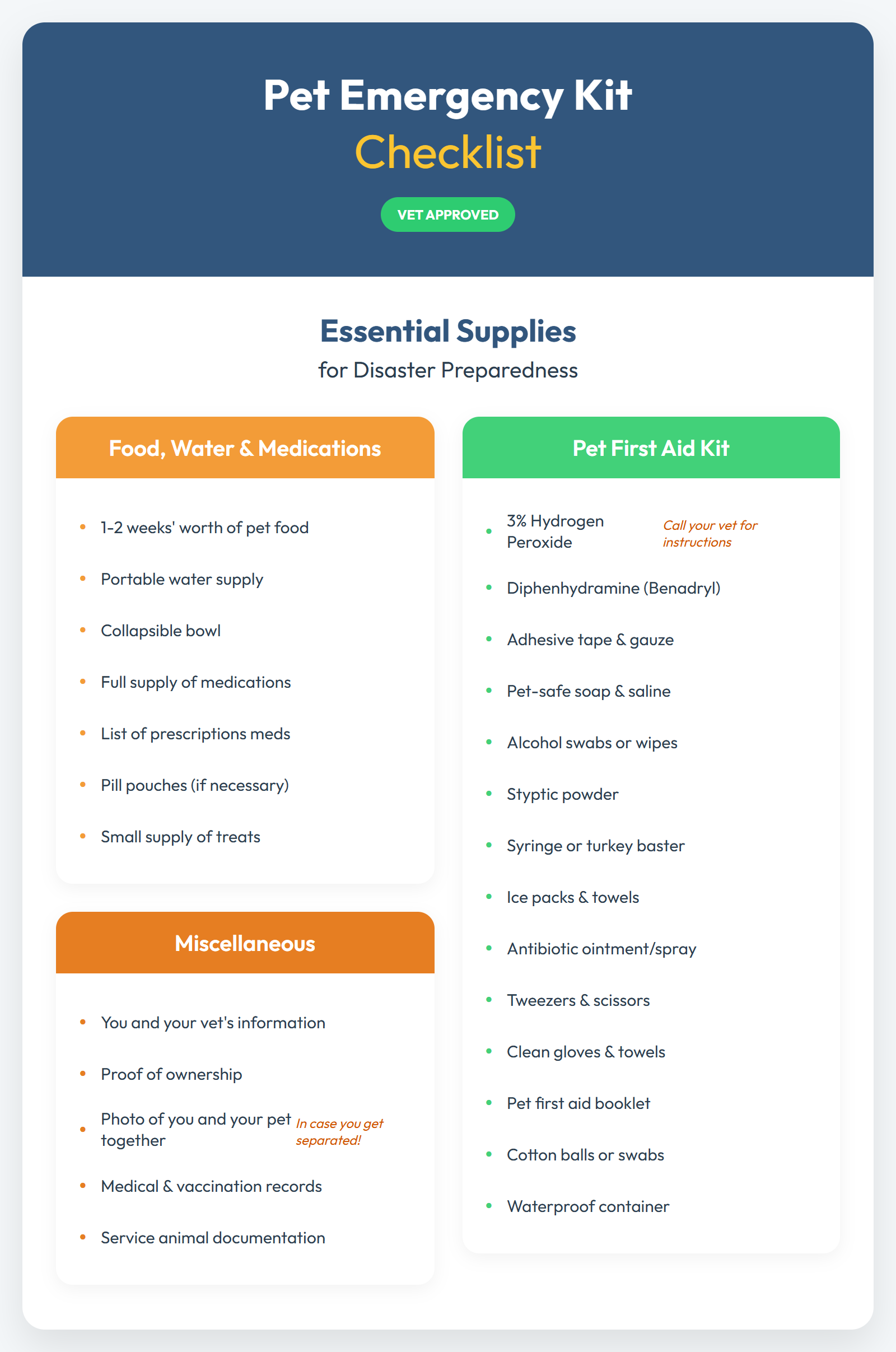
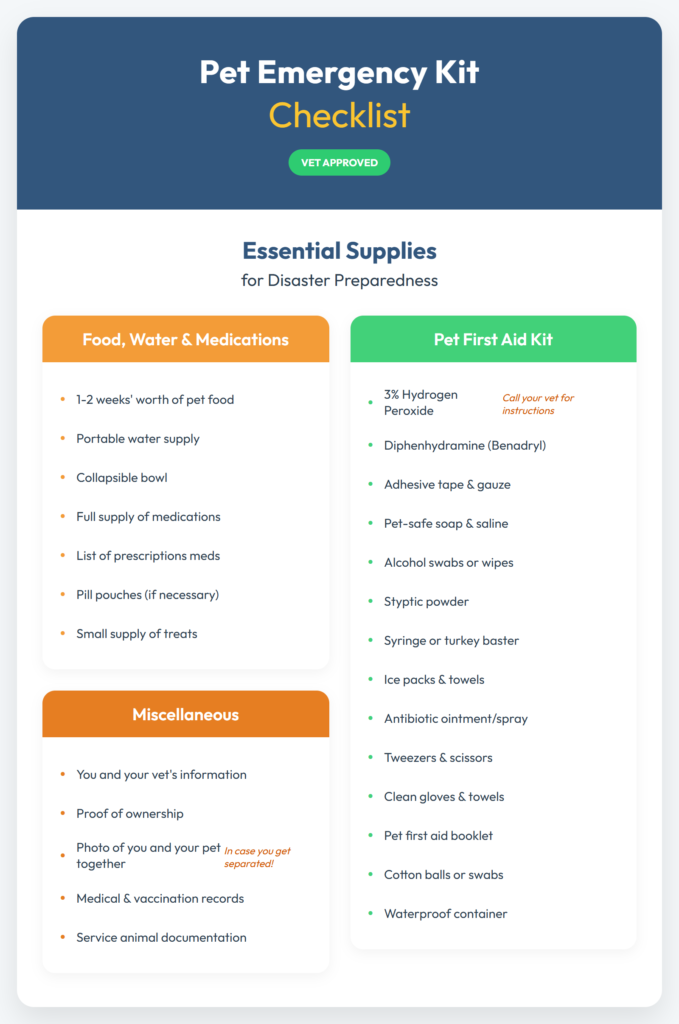
In this complete guide, we’ll walk through everything you should include in a vet-approved pet emergency kit, why each item matters, and how to organize it in a practical, stress-free way.
By the end, you won’t just have a checklist.
You’ll have peace of mind.
Why Every Pet Owner Needs an Emergency Kit
Many people prepare emergency supplies for themselves — food, water, flashlights, first aid kits.
But they forget something critical.
Their pets.
In an emergency, you may have minutes — sometimes seconds — to leave your home. There’s no time to gather food, medication, paperwork, and supplies individually.
Having a ready-to-go kit ensures:
- Your pet has food and water.
- You have access to medications.
- You can provide first aid if needed.
- You have proof of ownership and medical history.
- You reduce panic during stressful situations.
Preparedness isn’t paranoia.
It’s responsible pet parenting.
Section 1: Food, Water & Medications
Let’s start with the basics — survival essentials.
If you had to evacuate for two weeks, could you easily feed and care for your pet?
Most people can’t without preparation.
Here’s what to include.
1–2 Weeks’ Worth of Pet Food
In a disaster, stores may close. Deliveries may stop. Roads may be blocked.
Keep at least 7–14 days of sealed pet food in your emergency kit.
Tips:
- Rotate food every few months to keep it fresh.
- Store in airtight containers.
- Label with expiration dates.
- Include manual can openers if using canned food.
If your pet has a special prescription diet, this becomes even more important.
Portable Water Supply
Water is often harder to access than food during emergencies.
Keep bottled water specifically for your pet.
General guideline:
- One gallon per pet per day.
That may sound like a lot — but dehydration happens quickly.
Don’t assume your tap water will always be safe after a disaster.
Collapsible Bowls
They’re lightweight. Compact. Easy to store.
Silicone collapsible bowls take almost no space and make feeding on the go simple.
Full Supply of Medications
If your pet takes daily medication — heart medicine, seizure medication, thyroid pills — missing even a few doses can cause serious health problems.
Keep:
- A 1–2 week supply in your kit.
- Clear instructions on dosage.
- Expiration dates checked regularly.
Rotate medications just like food.
List of Prescription Medications
In case you lose the original bottles, keep a written list including:
- Medication name
- Dosage
- Frequency
- Prescribing veterinarian
- Pharmacy information
If you need emergency refills, this list saves critical time.
Pill Pouches (If Needed)
If your pet requires pills hidden in treats, keep a small sealed pack of pill pockets.
Stressful environments make pets less cooperative — having familiar methods helps.
Small Supply of Treats
Treats aren’t just for spoiling.
They’re useful for:
- Reducing anxiety
- Encouraging cooperation
- Positive reinforcement
- Building comfort in unfamiliar settings
In emergencies, emotional support matters too.
Section 2: Pet First Aid Kit
This is where preparation truly pays off.
A pet-specific first aid kit helps you handle minor injuries before you reach a veterinarian.
Important note: Always call your vet for instructions during serious medical issues. First aid is not a replacement for professional care.
3% Hydrogen Peroxide
This may be used (only under veterinary guidance) to induce vomiting in certain poisoning cases.
Never administer without calling your vet first.
Improper use can cause harm.
Diphenhydramine (Benadryl)
Commonly used for allergic reactions such as:
- Bee stings
- Insect bites
- Mild swelling
However:
- Dosage depends on your pet’s weight.
- Always confirm dosage with your veterinarian beforehand.
Write the correct dosage on the bottle.
Adhesive Tape & Gauze
Essential for:
- Wrapping minor wounds
- Controlling bleeding
- Protecting injured paws
Choose medical-grade, pet-safe options.
Pet-Safe Soap & Saline
Use for:
- Cleaning wounds
- Flushing debris
- Washing irritated skin
Never use harsh human products.
Alcohol Swabs or Wipes
Helpful for disinfecting tools — not open wounds.
Important distinction:
Alcohol can irritate raw tissue.
Styptic Powder
If you accidentally trim a nail too short and it bleeds, styptic powder stops bleeding quickly.
Every pet owner who trims nails at home should have this.
Syringe or Turkey Baster
Useful for:
- Flushing wounds
- Giving oral medication
- Providing water carefully
Choose needle-free syringes only.
Ice Packs & Towels
For:
- Reducing swelling
- Managing heat exposure
- Cooling during overheating
Instant cold packs are great for kits.
Antibiotic Ointment or Spray
For minor cuts and scrapes.
Always ensure it’s labeled safe for pets.
Tweezers & Scissors
For:
- Removing splinters
- Cutting bandage material
- Removing debris
Choose blunt-tip scissors for safety.
Clean Gloves & Towels
Protect yourself and your pet.
Gloves reduce infection risk.
Towels:
- Wrap injured pets safely.
- Provide warmth.
- Offer comfort.
Pet First Aid Booklet
In emergencies, stress affects memory.
A simple, clear first aid guide can help you stay focused.
Choose one specifically designed for pets.
Cotton Balls or Swabs
Useful for:
- Cleaning ears
- Applying medication
- Gently absorbing fluids
Never insert deep into ear canals.
Waterproof Container
Keep your entire first aid kit in a waterproof, labeled container.
Emergencies often involve water, rain, or damp conditions.
Protect your supplies.
Section 3: Miscellaneous Essentials
These items might seem secondary — until you actually need them.
Your Contact Information & Vet Information
Keep printed copies of:
- Your name and phone number
- Emergency contact
- Primary vet contact
- Emergency animal hospital nearby
Phones die. Batteries drain.
Paper copies matter.
Proof of Ownership
In evacuation shelters or chaotic situations, animals sometimes get separated.
Keep:
- Adoption papers
- Registration papers
- Microchip information
This helps reunite you faster.
Photo of You and Your Pet Together
This may sound small — but it’s powerful.
If separated, showing a clear photo of you with your pet helps responders verify ownership.
Store both printed and digital copies.
Medical & Vaccination Records
Some shelters require proof of vaccination.
Keep copies of:
- Rabies certificate
- Core vaccines
- Recent medical history
Laminate or store in waterproof pouches.
Service Animal Documentation (If Applicable)
If your pet is a service animal, include proper documentation.
This ensures access during evacuations or shelter stays.
Organizing Your Pet Emergency Kit
Now that you know what to include, let’s talk about setup.
Choose the Right Container
Options:
- Waterproof plastic bin
- Durable backpack
- Labeled storage crate
Backpacks are especially useful for quick evacuations.
Label Clearly
Mark:
“PET EMERGENCY KIT”
In large, visible letters.
If someone else needs to grab it, they should find it instantly.
Store in an Accessible Location
Avoid:
- Attics
- Basements
- Hard-to-reach closets
Keep it near your primary exit.
Update Every 3–6 Months
Set calendar reminders to:
- Replace expired food
- Rotate medications
- Update documents
- Refresh water
Preparedness requires maintenance.
Preparing Your Pet Emotionally for Emergencies
Physical supplies are only part of the equation.
Emergencies are stressful for animals.
Prepare by:
- Crate training
- Practicing short car rides
- Familiarizing with travel carriers
- Keeping ID tags updated
- Microchipping your pet
Calm pets respond better in crises.
Special Considerations for Different Pets
Dogs and cats have different needs.
For dogs:
- Leash
- Extra collar
- Waste bags
For cats:
- Litter
- Small litter tray
- Extra carrier security
For small animals:
- Extra bedding
- Secure travel cage
- Species-specific food
Tailor your kit to your pet’s needs.
Common Mistakes to Avoid
- Waiting until disaster warnings appear.
- Forgetting medication refills.
- Not rotating food.
- Skipping documentation.
- Storing kit in inaccessible areas.
- Forgetting emotional comfort items.
Preparation is about details.
The Emotional Comfort Factor
Don’t underestimate this.
Include:
- Favorite toy
- Familiar blanket
- Comfort item
In chaotic environments, familiar scents reduce stress.
Why This Matters More Than You Think
In emergencies, humans experience panic.
Pets experience confusion.
They don’t understand evacuation orders or sirens.
They rely on you completely.
Having a prepared kit means:
- Faster response
- Less chaos
- More confidence
- Better outcomes
It transforms fear into action.
Final Thoughts: Peace of Mind Is Priceless
You hope you never need your pet emergency kit.
But if you do, you’ll be incredibly grateful it’s ready.
Preparedness is love in action.
It’s not dramatic.
It’s not overreacting.
It’s simply acknowledging that life is unpredictable — and choosing to protect the ones who depend on you.
Your pet trusts you without question.
Preparing an emergency kit is one of the clearest ways to honor that trust.
Start today.
Gather supplies.
Organize them thoughtfully.
Update them regularly.
Because when emergencies happen, calm preparation makes all the difference.
And your best friend deserves nothing less. 🐾