
The first five weeks of a kitten’s life are the most delicate and important. During this period, kittens grow rapidly, develop their senses, learn to walk, and begin exploring the world around them. If a mother cat is present, she naturally provides warmth, milk, cleaning, and protection. However, in cases where kittens are orphaned or rescued, humans must step in and provide the necessary care.
Understanding how kittens develop week by week helps you give them exactly what they need at each stage. Feeding, warmth, hygiene, and gentle interaction all play essential roles in helping young kittens grow into healthy cats.
This detailed guide explains how to care for kittens from 1 week to 5 weeks old, including feeding schedules, development milestones, and practical tips for keeping them healthy and safe.
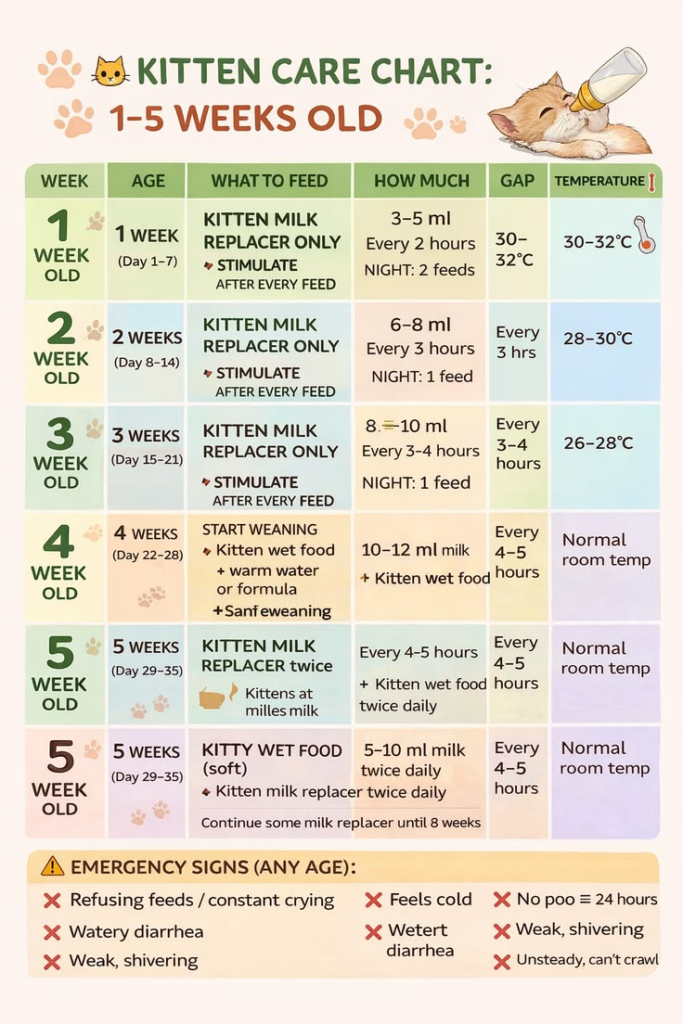
Why the First Five Weeks Are Critical
Kittens are born extremely fragile. Their eyes and ears are closed, they cannot regulate their body temperature, and they rely completely on their mother for food and care.
During the first five weeks, kittens experience rapid changes:
- Eyes open and vision develops
- Hearing improves
- Teeth begin growing
- Muscles strengthen
- Social behavior begins
Proper care during this stage directly impacts their long-term health and personality.
Week 1: Newborn Kitten Care (0–7 Days)
At one week old, kittens are still completely dependent on their caregiver.
What Kittens Are Like at One Week
- Eyes are closed
- Ears are folded
- They cannot walk yet
- Sleep most of the day
- Rely entirely on milk for nutrition
Most newborn kittens weigh 85–120 grams at birth and should steadily gain weight each day.
Temperature and Warmth
Kittens at this age cannot regulate their body heat. Keeping them warm is extremely important.
Ideal temperature for the nesting area:
85–90°F (29–32°C)
Ways to keep kittens warm include:
- Heating pad set on low
- Warm water bottle wrapped in a towel
- Soft blankets or fleece bedding
Always ensure kittens can move away from the heat source if they become too warm.
Feeding Schedule (Week 1)
Kittens need to eat every 2–3 hours, including during the night.
Use kitten milk replacer (KMR) rather than cow’s milk.
Typical feeding amount:
- About 2–6 ml per feeding, depending on size
Feed kittens using:
- A kitten bottle
- A syringe designed for small animals
Bathroom Stimulation
Newborn kittens cannot urinate or defecate on their own.
After every feeding:
- Use a warm damp cotton ball
- Gently rub the genital and belly area
- Continue until the kitten urinates
This process mimics the grooming behavior of a mother cat.
Week 2: Early Development Stage (8–14 Days)
At two weeks old, kittens begin to change noticeably.
Physical Development
- Eyes begin to open
- Hearing slowly improves
- Crawling becomes stronger
- Body weight doubles from birth
Kittens usually weigh around 200–250 grams by the end of week two.
Feeding Schedule (Week 2)
Feed kittens every 3 hours.
Each kitten may drink:
6–10 ml of formula per feeding
Continue bottle feeding with kitten milk replacer.
Hygiene and Cleaning
Kittens still require bathroom stimulation after every meal.
Also:
- Wipe their fur with a warm damp cloth if milk spills
- Keep bedding clean and dry
- Replace blankets daily if needed
Week 3: The Exploration Stage (15–21 Days)
Week three is exciting because kittens begin becoming more active and curious.
Development Milestones
During week three, kittens:
- Start standing and walking
- Become more alert
- Begin playing with siblings
- Develop small baby teeth
Their movements are still unsteady, but they begin exploring their environment.
Temperature Needs
The nesting area can be slightly cooler now:
75–80°F (24–27°C)
However, warmth is still important.
Feeding Schedule (Week 3)
Kittens can now eat every 4 hours.
Average feeding amount:
10–14 ml per feeding
Continue bottle feeding until the kitten shows interest in other foods.
Beginning Socialization
Week three is a good time to start gentle interaction.
You can:
- Hold kittens carefully
- Speak softly to them
- Let them crawl on your hands
This helps kittens become comfortable with humans later in life.
Week 4: Transition to Solid Food (22–28 Days)
Week four marks the beginning of a major change in kitten development.
At this stage, kittens start transitioning from milk to solid food.
Development at Four Weeks
Kittens now:
- Walk with better balance
- Play with littermates
- Show curiosity about their surroundings
- Start grooming themselves
They may weigh 350–450 grams.
Introducing Solid Food
At four weeks, you can begin offering kitten gruel.
Kitten gruel is made by mixing:
- Wet kitten food
- Kitten milk replacer
The texture should be soft and soupy.
Place a small amount in a shallow dish and allow the kitten to explore.
At first, kittens may step in the food or lick it accidentally. This is normal as they learn.
Bottle Feeding Still Needed
Even when introducing food, kittens still need bottle feeding.
Feed them every 4–5 hours.
Week 4: Litter Training Begins
Four weeks is also the time to introduce a litter box.
Use:
- A shallow tray
- Non-clumping litter (safer for kittens)
Place kittens in the litter box after meals.
Most kittens instinctively learn quickly.
Week 5: Growing Independence (29–35 Days)
By week five, kittens become very playful and energetic.
This stage is when their personalities begin to appear.
Physical Development
Five-week-old kittens:
- Run and play actively
- Develop stronger teeth
- Eat more solid food
- Groom themselves
Weight typically reaches 450–550 grams.
Feeding Schedule (Week 5)
At this stage, kittens eat:
- Wet kitten food
- Kitten gruel
- Less milk replacer
Feed kittens 3–4 meals per day.
Gradually reduce bottle feeding as they eat more solid food.
Socialization During Weeks 4–5
These weeks are extremely important for behavioral development.
Kittens should experience:
- Gentle human handling
- Playtime with toys
- Interaction with littermates
Positive experiences during this stage help kittens grow into friendly adult cats.
Keeping the Kitten Environment Safe
Young kittens are curious but fragile.
To keep them safe:
- Remove small objects they could swallow
- Keep electrical cords out of reach
- Avoid high surfaces where they might fall
Provide safe toys such as:
- Soft balls
- Feather toys
- Small plush toys
Health Monitoring for Young Kittens
Healthy kittens should:
- Gain weight daily
- Have bright eyes
- Show curiosity and playfulness
- Eat regularly
Weigh kittens every day if possible.
Healthy kittens gain about 10–15 grams per day.
Common Health Issues in Young Kittens
Caregivers should watch for warning signs such as:
- Diarrhea
- Loss of appetite
- Weakness
- Continuous crying
- Cold body temperature
- Vomiting
If these symptoms appear, contact a veterinarian immediately.
Young kittens can become sick quickly.
Parasite Prevention
Kittens may develop:
- Fleas
- Worms
Fleas can cause anemia in tiny kittens, so they must be removed quickly.
Safe options include:
- Flea combs
- Warm cloth cleaning
Most flea medications are unsafe for kittens under 8 weeks old, so always consult a veterinarian.
Vaccination and Veterinary Care
Veterinary care should begin early in a kitten’s life.
Most kittens receive their first vaccines at:
6–8 weeks old
Vaccines protect against common feline diseases such as:
- Feline distemper
- Calicivirus
- Herpesvirus
Regular vet checkups help ensure healthy growth.
Emotional Needs of Young Kittens
Beyond food and warmth, kittens need comfort and security.
Orphaned kittens especially benefit from:
- Soft bedding
- Gentle petting
- Calm voices
- Safe playtime
A stuffed toy or soft blanket can mimic the comfort of siblings.
Preparing Kittens for Adoption
If you are caring for rescued kittens, they should remain with their littermates until at least 8 weeks old.
This allows them to:
- Learn social skills
- Develop proper behavior
- Build stronger immune systems
By this time, kittens are usually:
- Eating solid food
- Using the litter box
- Active and playful
Final Thoughts
Caring for kittens from 1 to 5 weeks old requires dedication, patience, and gentle care. These early weeks shape a kitten’s health, development, and personality.
The most important things to remember are:
- Keep kittens warm and safe
- Feed them on a consistent schedule
- Monitor their growth and health
- Provide gentle socialization
With proper care and attention, even orphaned kittens can grow into healthy, loving cats.
Watching a tiny kitten develop from a fragile newborn into a playful young cat is one of the most rewarding experiences for any animal lover. Every feeding, every warm blanket, and every moment of care helps give them the best possible start in life. 🐾💛